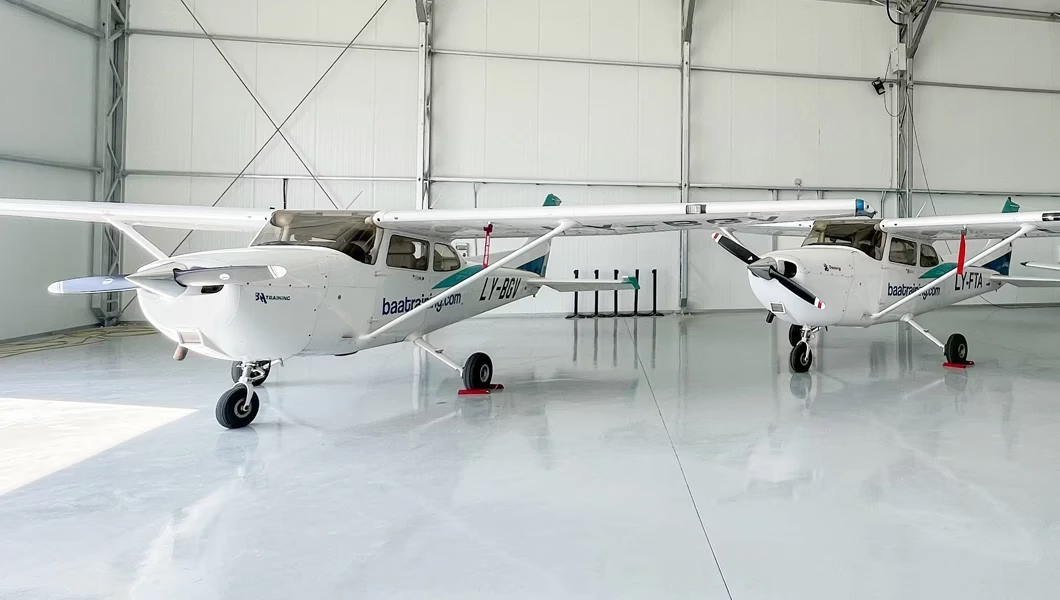
Across the globe, many favor the Cessna 172 Skyhawk, a four-seater, single-engine aircraft crafted by the American Cessna Aircraft Company.
Background
Having taken its maiden flight in June 1955, the Cessna 172 Skyhawk has become an icon in aviation history. With over 44,000 units manufactured (over 1,400 of them produced and delivered in the first year alone), it stands as a beacon of success in general aviation—no other aircraft has surpassed this production number.
Furthermore, most pilots worldwide have flown and earned their wings precisely in the Cessna 172 Skyhawk. Continue reading, and you’ll realize why…
1. The safest of all single-engine aircraft
It should be your top priority to ensure the safety of your flight training, and the Cessna 172 Skyhawk offers precisely that.
Highly appreciated for its safety features, this aircraft has an incredibly low fatality rate of 0.56 fatal crashes per 100,000 flying hours compared to the industry standard of 1.2-1.4.
Its exceptional safety record underscores its reliability and the trust it is renowned for within the aviation community.
2. Easy to operate
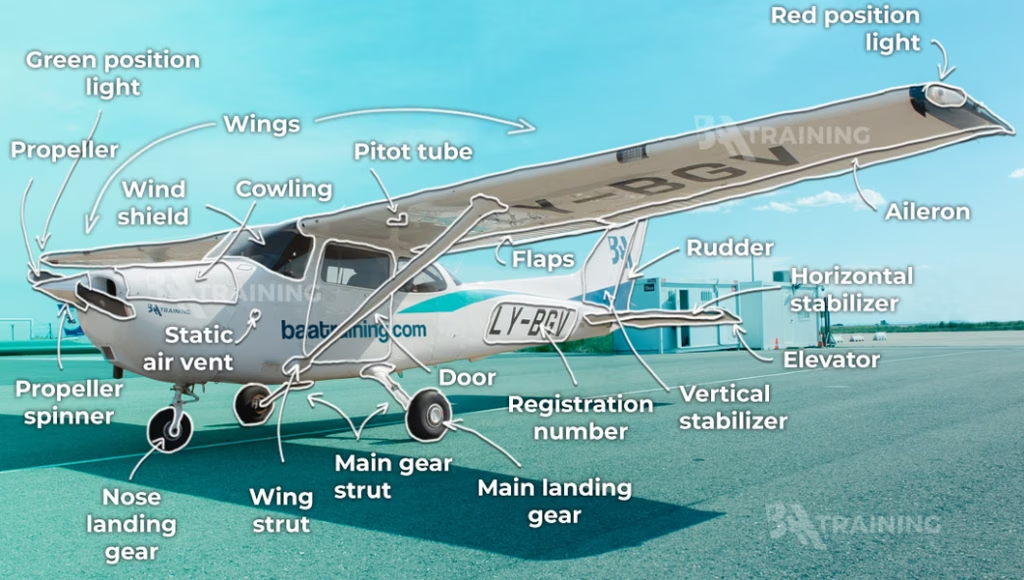
One of the main advantages aiding the operation of this aircraft is its tricycle landing gear that enhances stability and eases control during landing.
Because of the design, the center of gravity (COG) is in front of the main wheels, which helps to straighten the aircraft during landings when necessary.
If the aircraft is slightly misaligned, the weight distribution corrects the alignment, contributing to smoother landings and making it more forgiving for pilots, especially during training.
3. Spacious and comfortable
The Cessna 172 Skyhawk is bigger and more stable than the 150/152.
It has a capacity of four people, including a pilot, and two doors, so you have easy access and don’t have to climb over the wings, which is inevitable in some alternative aircraft. With the wings placed above the fuselage instead of underneath, Cessna 172 pilots are given far better visibility of the world around them without the wing area blocking their view.