What is Taxiing?
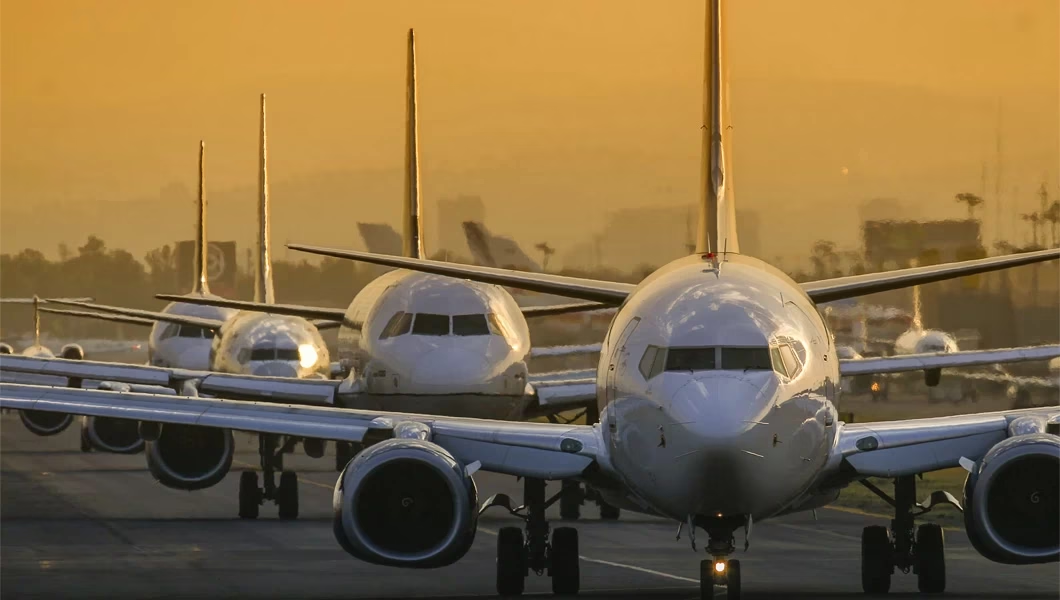
Before we get to all the nitty-gritty of taxiing a plane, we need to be on the same page when it comes to an understanding of what is “taxiing.” The most common taxiing definition—the movement of an aircraft on the ground. To put it more simply, the aircraft uses its own power—either jet engines or propellers—to get from point A to point B at an airport.
The key moment here is that the accelerating run before taking off or decelerating right after landing is not part of the taxiing. These are their own procedures, called takeoff roll and landing rollout. Taxiing is slower in speed but still can be as challenging, especially at some of the world’s busiest airports.
Trivia fact: The word “taxi” was used as slang for aircraft around the beginning of the 1910s. It was reminiscent of taxi cars driving around the block, looking for passengers. While the jargon didn’t stick around, words like “taxiing” and “taxiway” remained in the aviation vocabulary. You can bust out this nugget of knowledge at your next aviation trivia night!
How do pilots navigate airport taxiways?
So, when the airplane wheels touch the tarmac, how do pilots find their way onto the correct taxiway and to the correct gate?
As with most things in aviation, preparation is everything. When pilots fly new routes, they do thorough preparation, including getting familiar with the detailed airport charts. They show everything—the layout of an airport, taxiways, runways, stands, ramps, and more.
Nowadays pilots rely on technology to help them guide the aircraft through the airport maze. Some aircraft systems are equipped with moving map displays—think Google Maps but for 50-meter-long aircraft—or pilots can access them on their portable devices. On top of that, airports have clear-to-follow markings, signs, and ground lights for nighttime or low visibility. The Air Traffic Controllers (ATC) also give taxi instructions to pilots upon landing, making a pilot’s job a bit more easier.
In cases of getting lost while taxiing, airports help guide the aircraft with a so-called ‘follow me’ vehicle, whose purpose is to lead the airplane to its designated gate. Some airports make it a more colorful experience like the Bologna Airport in Italy did by partnering with Lamborghini for their follow-me car.
However, most of the time, pilots have to do it themselves, and understanding markings for taxiing and following ATC directions are still needed skills.
Reading taxiway markings
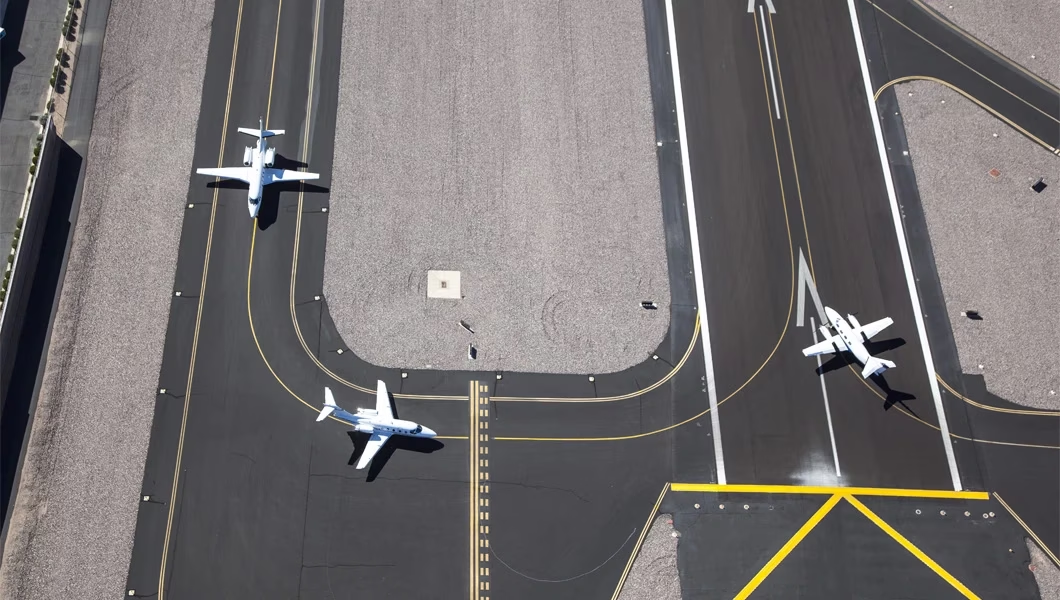
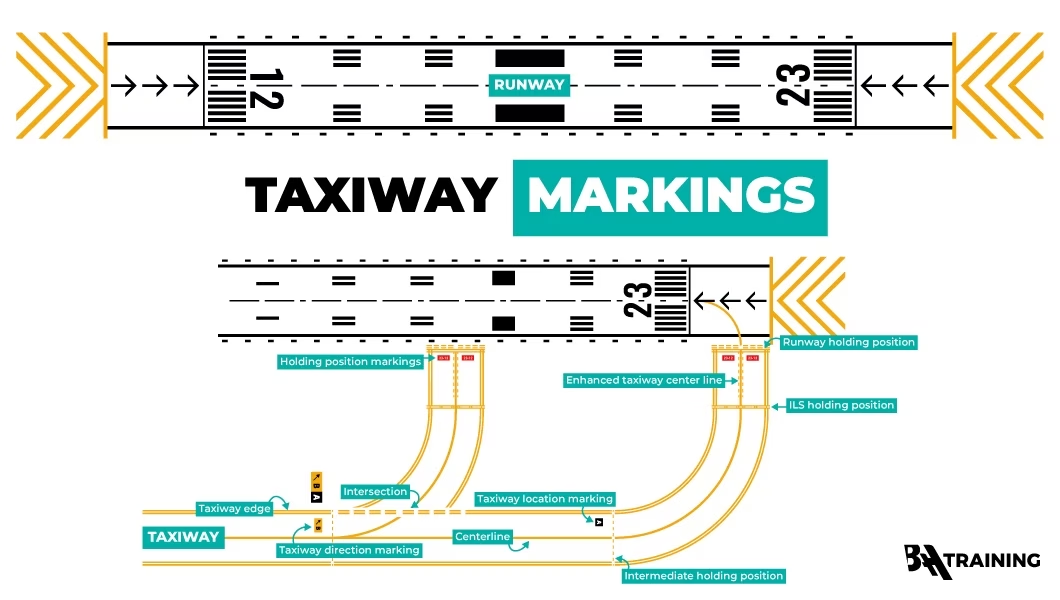
Two colors dominate the airport tarmac—white and yellow. Runway areas are painted white, and yellow is reserved for taxiways. While it might look pretty straightforward to simply follow the yellow line looking out of the cockpit, it’s a little bit more complex than that.
Centerline
The taxiway centerlines are all continuous lines, which provide pilots with constant visual guidance for taxiing. The aircraft nose wheel should be in line with the centerline.
Taxiway edge
The taxiway borders are marked in continuous double (or sometimes single) yellow lines. They indicate that the aircraft cannot leave or cross these lines.