Advancing to a higher rank requires meeting specific flight hour requirements and other prerequisites. So, going the „extra mile“ is, in most cases, simply impossible since ambition and motivation cannot override the hours logged.
This article will dwell on how this ranking system works and how to progress a pilot career. But before that, let’s get down to when the pilots started wearing their famous uniforms with epaulets that reveal their rank.
How Pilot Uniforms Came About
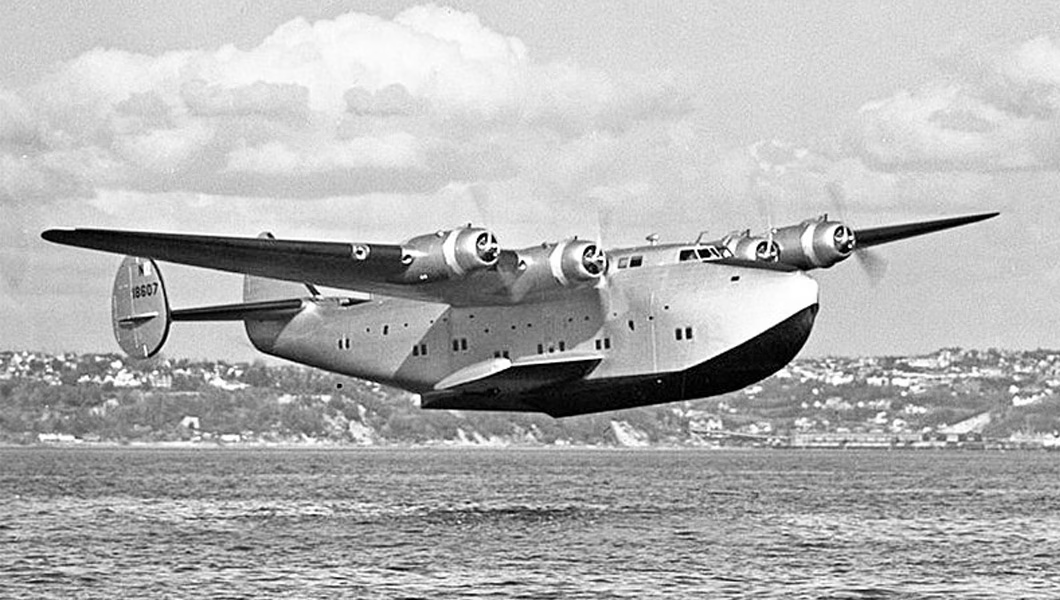
Pilot uniforms were introduced by Pan American World Airways, a major international airline that operated from 1927 to 1991. After the Boeing 314 flying boat (called Clipper) entered service at Pan Am in the late ’30s, the management decided to require the pilots to wear naval officer-inspired formal apparel.
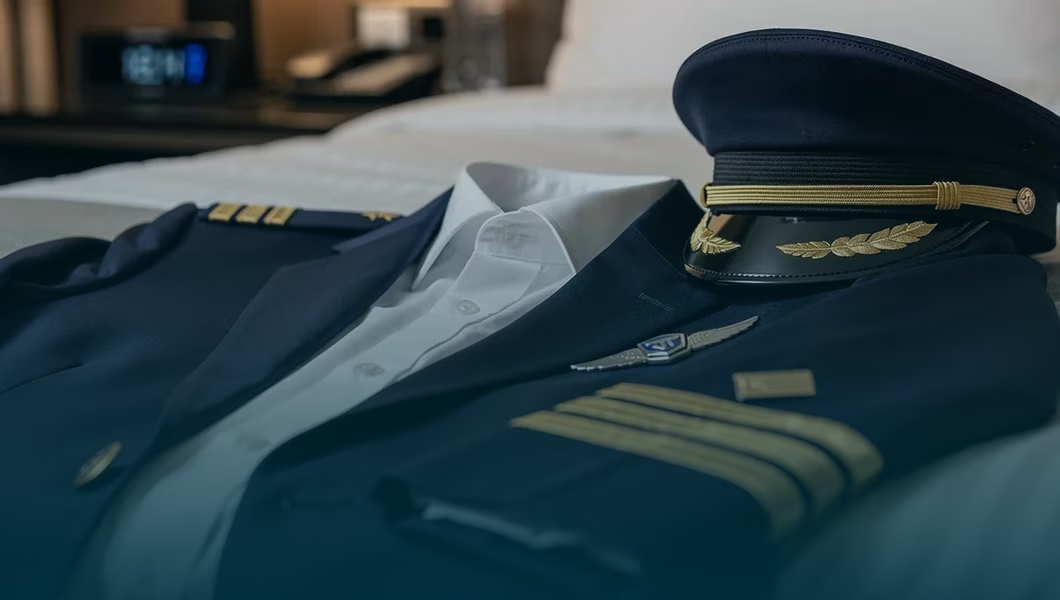
The uniform consisted of black trousers, a blazer with stripes signifying the rank, an officer-style cap, and a badge with a name. Although pilot uniforms have more modern materials and color patterns nowadays, they still maintain the essential elements associated with them for decades.
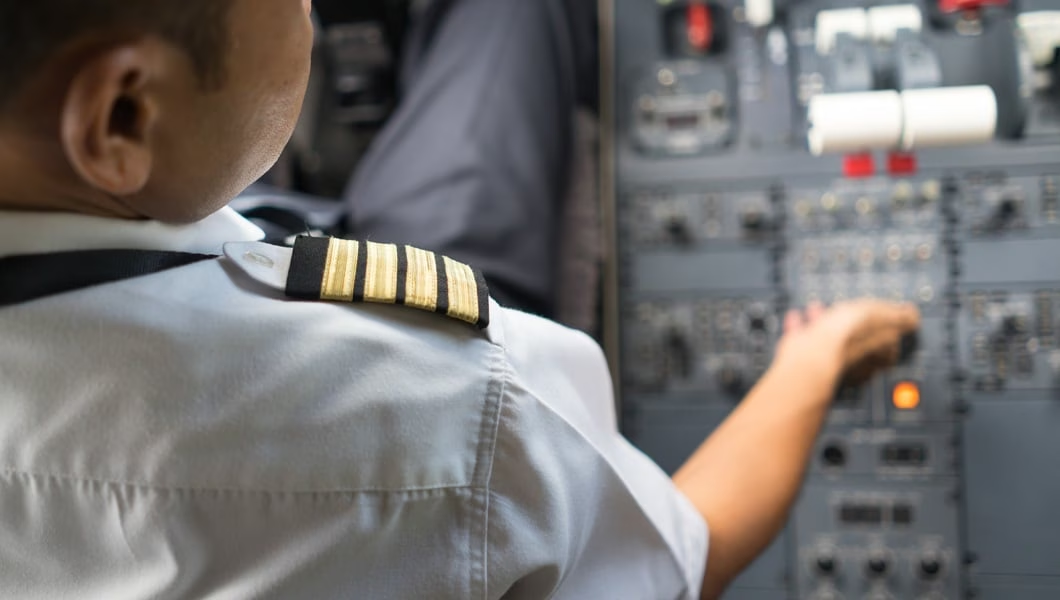
The traditional pilot uniform often features a tailored jacket with rank stripes (also called pilot bars) on the shoulders or sleeves, indicating the ranks of airline pilots.
1-2 Stripes: Student Pilot
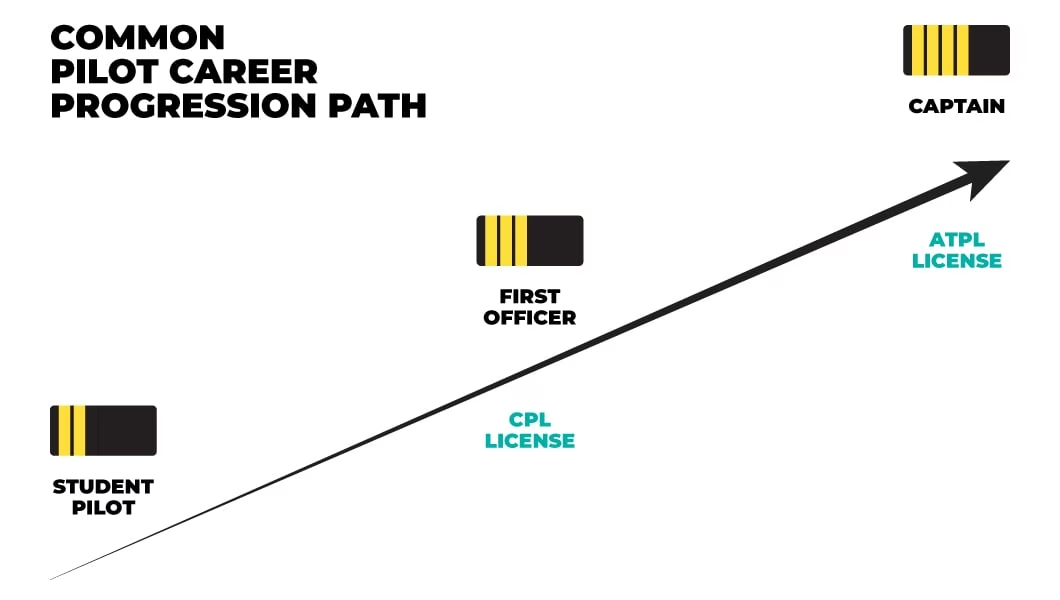
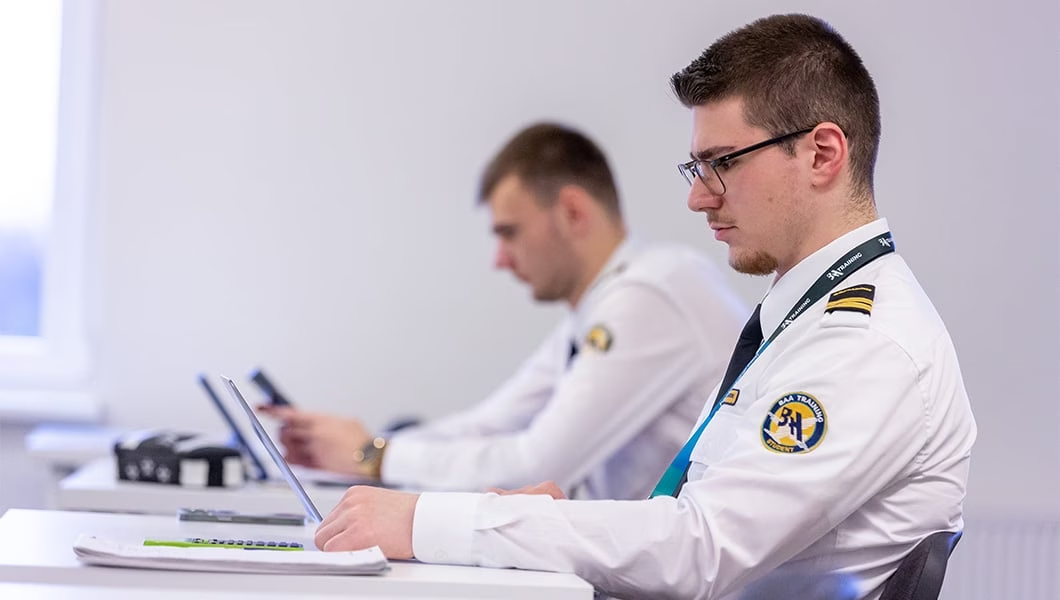
A student pilot is someone who is undergoing professional training to become an airline pilot one day. They typically wear one or two stripes on their shoulders or sleeves. The exact number is up to an aviation authority and/or their training organization.
At BAA Training, we give all our students a uniform that is mandatory to wear during ground and flight schools: tailor-made uniforms for the theory part and pilot shirts for flights. Throughout their training, they wear two pilot stripes on their shoulders. As they progress further in their aviation journey, they will start earning additional stripes.
2 Stripes: Second Officer
The Second Officer holds the third position in the aircraft’s command hierarchy and sits behind the Captain and First Officer to ensure sufficient rest periods for each pilot during long-haul flights.
However, only a few airlines have this junior position in the flight deck, and they are definitely not regional airlines that perform 2-3 hour flights. A Second Officer could be recognized by the two stripes on their uniform (sometimes Cabin Crew also wear two).
It is important to note that a fresh pilot graduate can confidently apply right away for a First Officer’s role. So, the Second Officer step can usually be „omitted“ when building a pilot career.
2-3 Stripes: First Officer
Once a student pilot has gained sufficient skills and knowledge by obtaining their Commercial Pilot License (CPL, also known as "frozen" ATPL), and, in most cases, have completed a Type Rating, they can apply for a position at an airline. There, they would essentially be First Officers (also called co-pilots) taking the right seat in the cockpit. The number of pilot uniform stripes on their uniform may vary depending on the airline, either two or three.
There is a common bias that First Officers do not actually fly the aircraft, but the Captains do. This is not true, as even the word „co-pilot“ implies that they fly in cooperation. A First Officer is the second in command of the aircraft after the Captain.
A First Officer plays a crucial role in flying an airplane by assisting in pre-flight preparations, participating in takeoff and landing procedures, managing flight systems, collaborating with the Captain, and providing support during emergencies and abnormal situations to ensure a safe and efficient flight.
Whenever the Captain gives them permission, they can take off and land the aircraft by themselves. A few destinations or weather situations may be deemed ‘Captain only,’ but otherwise, they are free to feel the joy of flying.