Prefer to listen? Press play to hear this article.
While aviation, in general, tries to practice as little hierarchy on flight as possible for better communication and decision-making, when you have two pilots in a cockpit during the flight, and it involves accountability and ownership of that responsibility, there is only one.
Pilot In Command—Is the One in Command
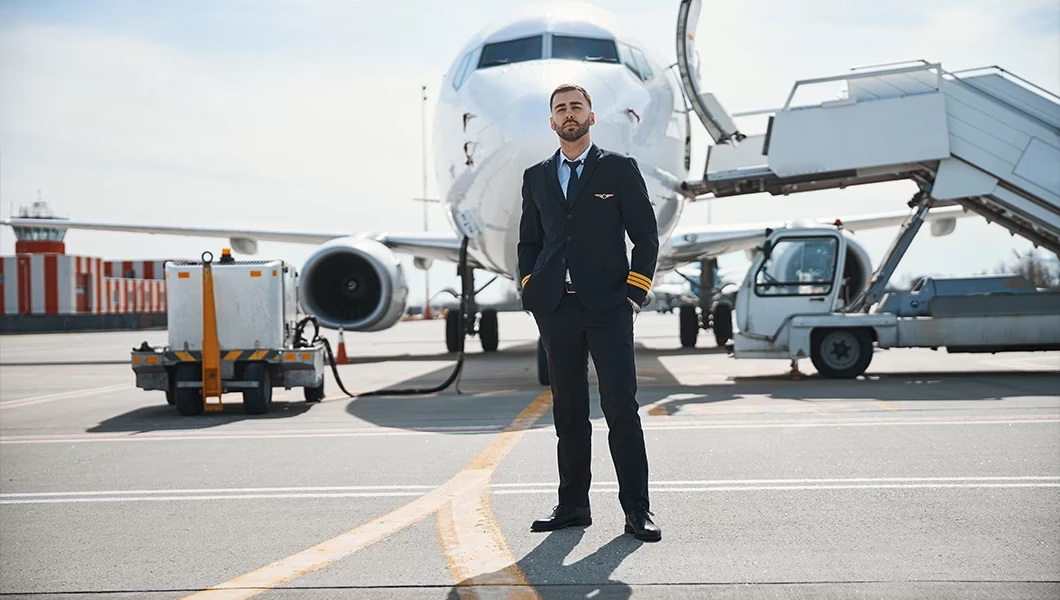
This is where the Pilot In Command (PIC) steps up. According to EASA’s Annex IV rules, the airline must assign one pilot from the flight crew, who is qualified to be in charge, as the pilot-in-command.
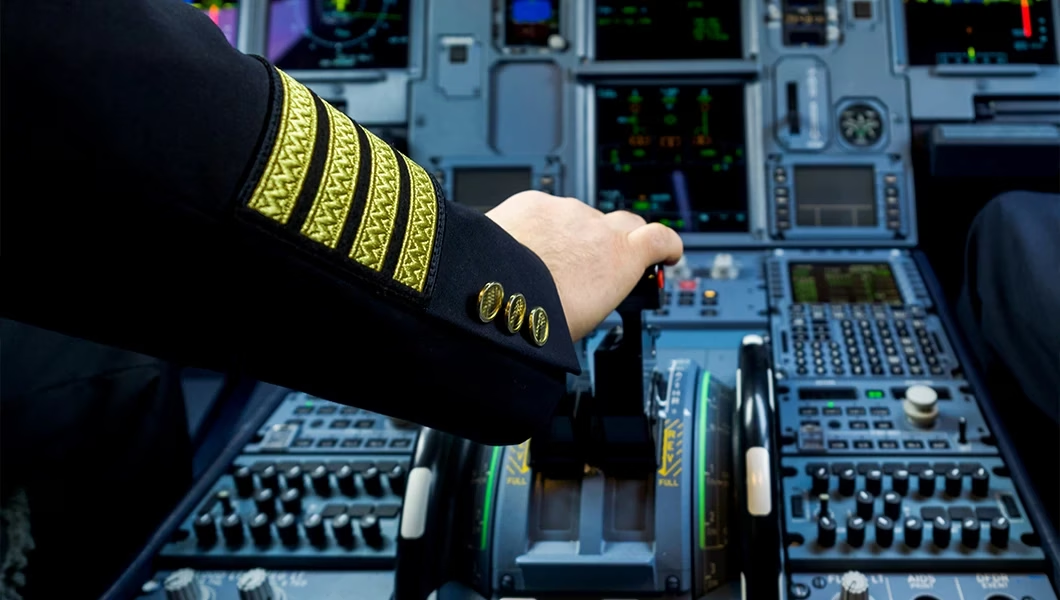
First of all, only a certificated and qualified pilot can take up the role. This means holding the rank of a Captain—logging at least 1,500 flight hours under EASA standards, or sometimes even more, as certain airlines have their own internal policies regarding that. Interestingly, the same number of hours is needed in the US to qualify for a First Officer (FO) role.
ICAO (International Civil Aviation Organization) defines the Pilot In Command as the pilot “responsible for flight safety and operation of the aircraft.” EASA (European Union Aviation Safety Agency) gives a practically identical definition: “designated as being in command and charged with the safe conduct of the flight.” But it doesn’t necessarily mean that the PIC has to be in control of the aircraft all the time, i.e., steering it all the time.
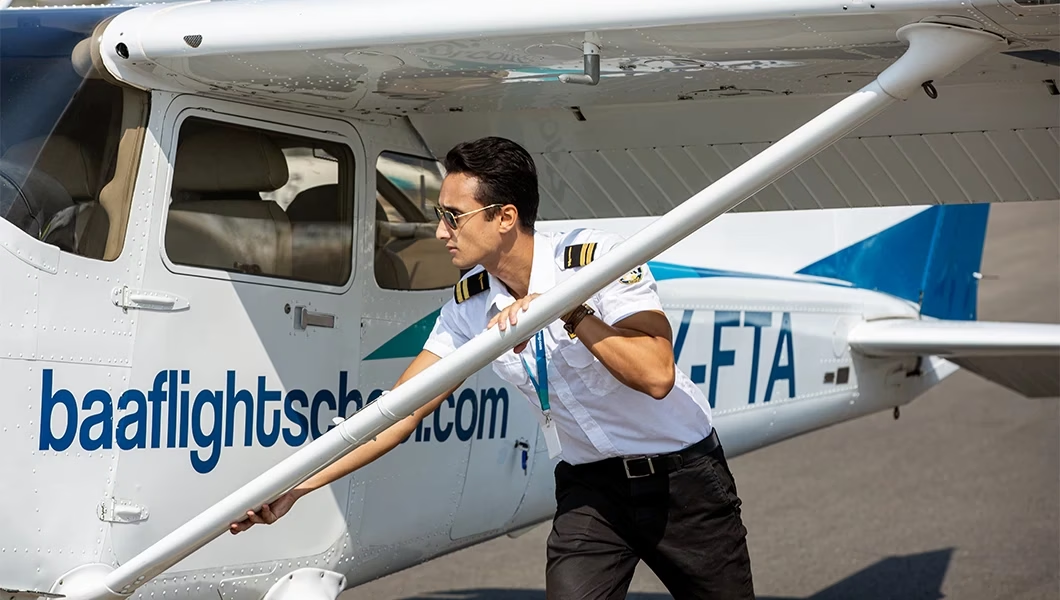
If you’re a student pilot (or a private pilot), for example, you are considered acting as a Pilot In Command (PIC) during solo flights, when you are the sole pilot in the cockpit. Any other time you are flying with an instructor, they are considered to be the PIC.
Key Responsibilities of Pilot In Command
The responsibilities of the PIC can be split among main six:
- Ensuring Safety: The Pilot In Command is ultimately responsible for the safety of the flight, including passengers, crew, and cargo. From takeoff to landing, they oversee all aspects of the flight, ensuring that everything is conducted within safety guidelines.
- Making Critical Decisions: As the primary decision-maker, the PIC has the authority to make crucial choices during the flight. Whether it’s adjusting the flight path due to weather conditions or handling in-flight emergencies, the PIC’s judgment is pivotal.
- Pre-Flight Responsibilities: Before the flight begins, the Pilot In Command ensures that the aircraft is fully prepared. This includes checking the airworthiness of the plane, verifying that all necessary equipment is on board, and confirming that the weight and balance are correct.
- In-Flight Duties: During the flight, the PIC must ensure that all crew members are performing their duties and are seated during critical phases of the flight. They are also responsible for reporting any hazardous weather or flight conditions to the appropriate air traffic services.
- Emergency Authority: In emergencies, the Pilot In Command can deviate from standard procedures if it’s necessary to maintain safety. This flexibility is crucial for managing unforeseen situations effectively.
- Post-Flight Reporting: After the flight, the PIC is responsible for documenting any issues or irregularities encountered during the flight. They must also ensure that the aircraft is properly secured and any necessary reports are filed.