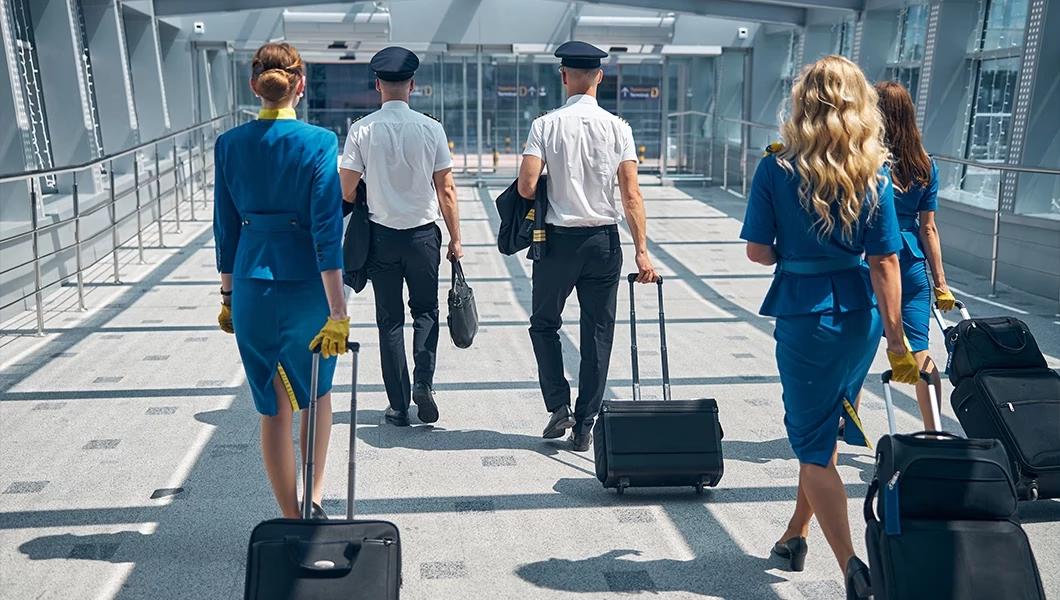
What is CRM?
Only a handful of other industries can boast the sheer volume of abbreviations that aviation possesses. And here is another one to add to your aviation vocabulary. While you might have heard the acronym CRM used before, chances are it’s not the same one used in the skies (and on ground). In aviation CRM stands for Crew Resource Management system (also called Cockpit Resource Management).
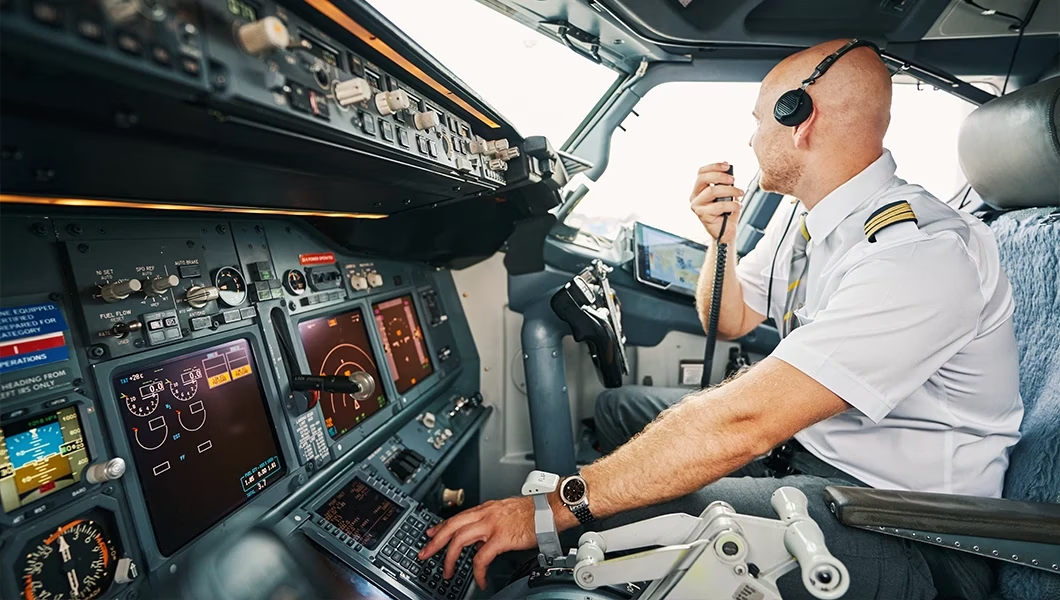
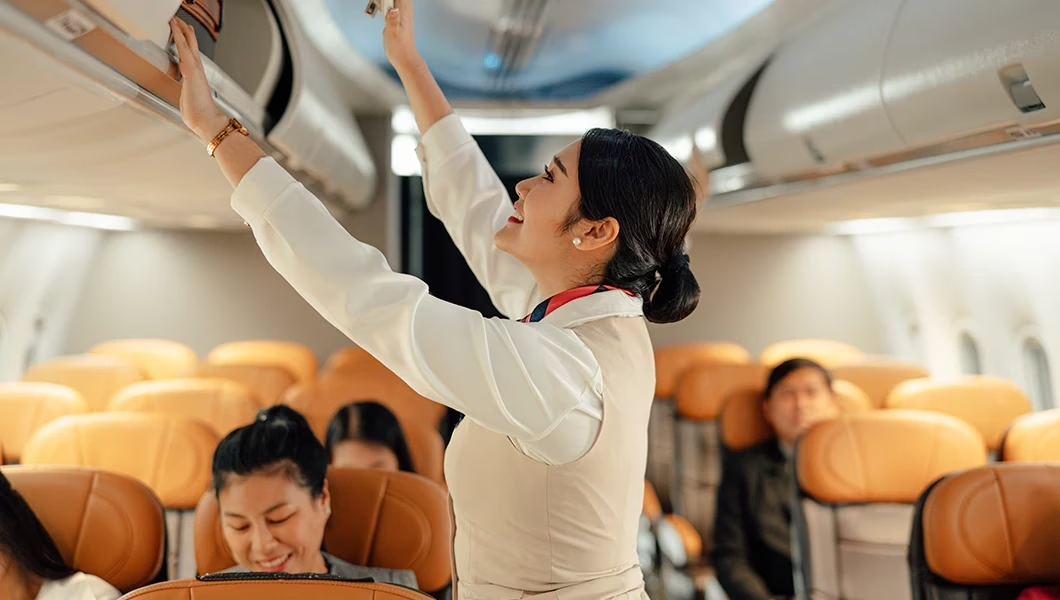
The Crew Resource Management definition is not as complicated as one might think, however. It is a skill set utilized by crews to recognize, avoid, and mitigate risk. The purpose of CRM is to improve aviation and flight safety as well as cognitive and interpersonal skills of those who are responsible for seeing the flight through – pilots and cabin crew.
Push for Better CRM Training
Looking back, Crew Resource Management has been a relatively fresh addition to the overall aviation education. It wasn’t completely non-existent, but the focus laid in mastering the technical skills. Aviation is said to be the first industry overall to adopt the CRM principles, and United Airlines holds the status of having been the first one to incorporate it into their curriculum in 1981.
Regrettably, as with many aspects of aviation, a critical need for improvement in interpersonal and decision-making skills emerged in the wake of tragic aviation accidents.
The 1977 Tenerife airport disaster – the deadliest in aviation history to date – was one of the heartbreaking pushes for better CRM training. After two passenger aircraft collided on the runway, taking 583 lives with them, the investigators emphasized mutual misunderstanding in radio communications between aircraft crew members and air traffic control (ATC) as the primary cause of the catastrophe.
A year later in 1978, United Airlines Flight 173 encountered landing gear malfunctions while approaching Portland International Airport. The pilot became fixated on resolving the gear issue, neglecting the dwindling fuel supply. The plane plummeted onto a wooded neighborhood, killing eight passengers and two crew members. The report detailed the lack of communication skills under stress, situational awareness, effective teamwork, decision making and task allocation were all contributing factors.

These accidents had a lasting effect on aviation, highlighting the undeniable need for standardization in radio communication as well as diligent inspection of cockpit procedures. According to an International Civil Aviation Organization (ICAO) report, investigations into the causes of aviation accidents have shown that human error takes anywhere from 60% to 80% in all airline incidents and accidents. Poor group decision making, ineffective communication, inadequate leadership and poor task and resource management have been the main issues at hand. As a result, Crew Resource Management system was introduced as a mandatory element of airline pilots’ training.
CRM Training Procedures
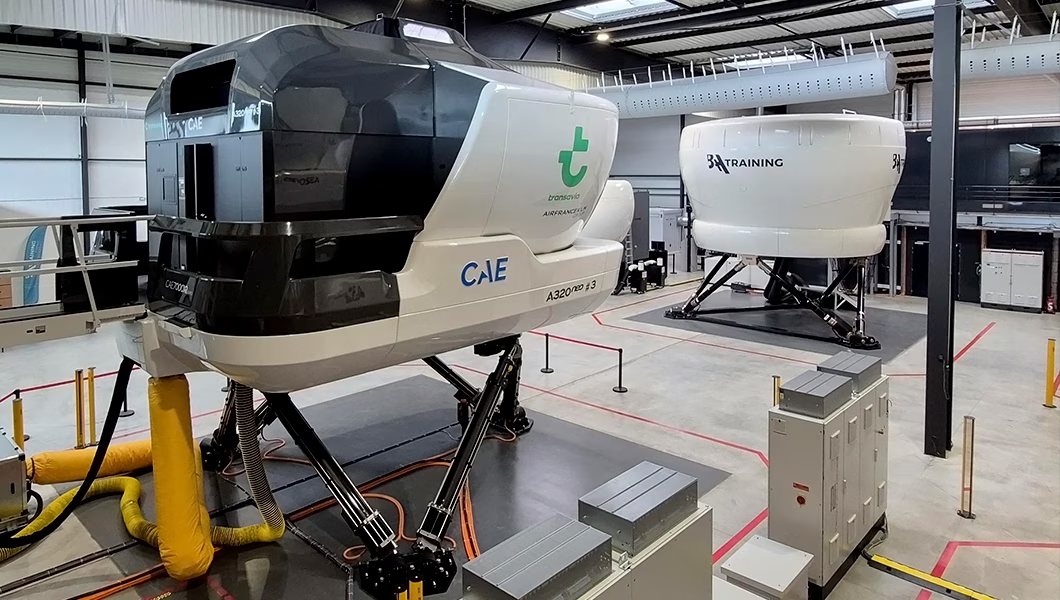
ICAO’s issued Advisory Circular for Crew Resource Management training program details key topics that CRM training should cover. While it acts as a strong recommendation, some of the defined areas give a good idea of where the focus for enhancing the soft skills come from:
- Human error and reliability, error chain, error prevention and detection;
- Company safety culture, Standard Operating Procedures (SOPs), organizational factors;
- Stress, stress management, fatigue and vigilance;
- Informational acquisition and processing, situational awareness, and workload management;
- Decision making;
- Communication and coordination inside and outside the cockpit;
- Leadership, team performance and behavior;
- Checklist and Briefing.
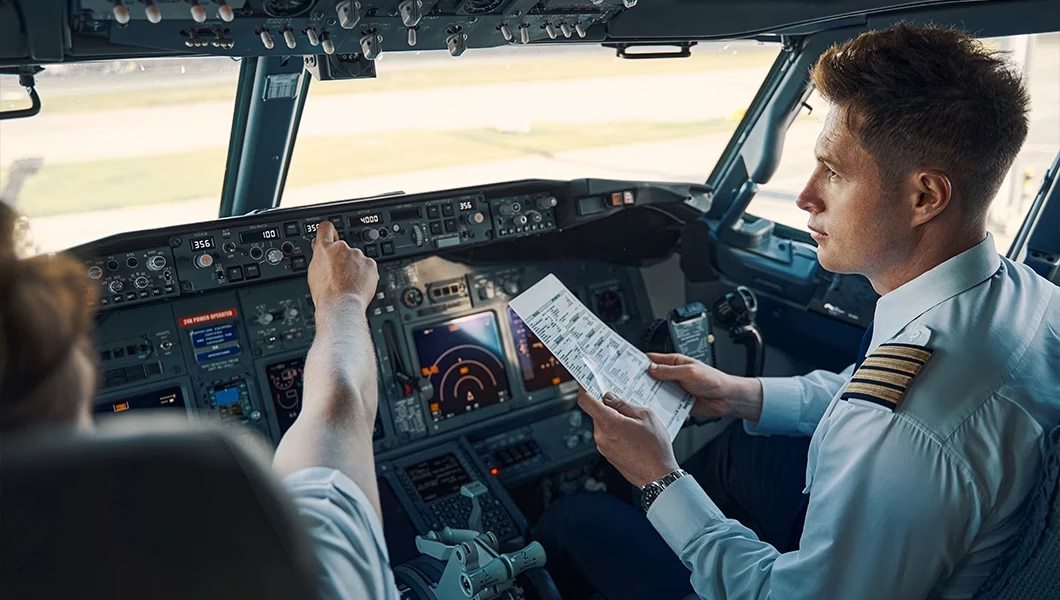
Six CRM Skills
The CRM training is usually categorized into six core competencies that – when regularly improved – can help in mitigating human errors as much as, well, humanly possible. So, what are those six Crew Resource Management skills that the aviation professionals need to constantly refine?
1. Communication skills
‘Communication is key’ – a golden phrase, that, while might be a tad bit repetitive, still rings extremely true. The job of a pilot is a highly responsible one. To improve communication and be clearly and effectively understood by teams both airborne and on ground is as important in a case of emergency as the honed technical skills.
The objective of CRM here is to enhance verbal communication. By equipping the team with a set of tools and techniques, they are able to convey information more effectively to one another. Incident and accident reports throughout the years show that one of the leading causes in miscommunication is the lack of callback (or clarification), usually on the pilot’s end. Assumption errors, incomplete communication, and jargon overload are just some of poor communication examples that can lead to fatal errors. It’s important to note that communication skills go beyond back-and-forth between the cockpit and air traffic controllers. Effectively conveyed information between the flight crew members is as crucial. That is why developing those interpersonal skills could be a deciding moment in the time of an emergency.