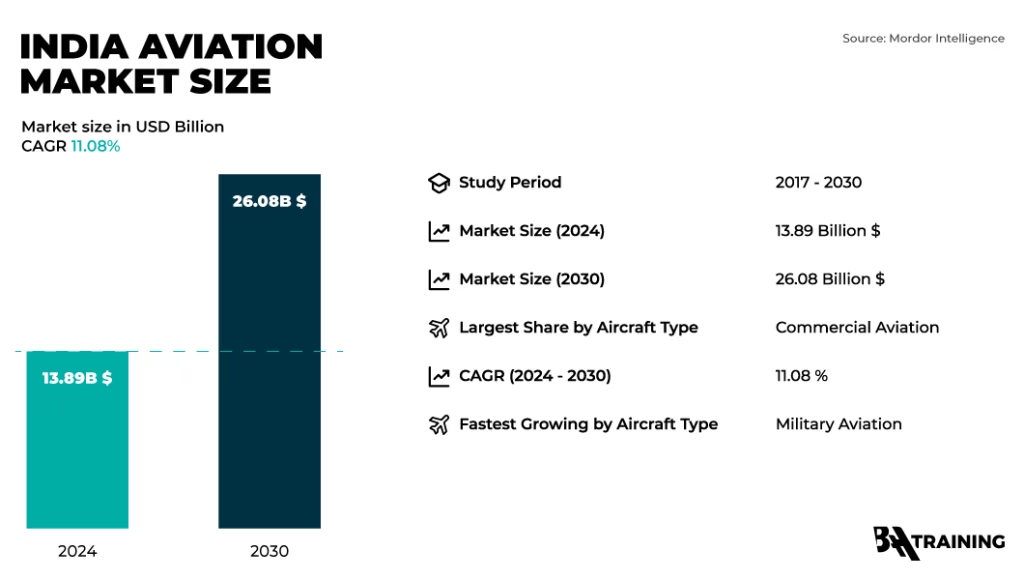
Interestingly enough, the Indian aviation market showcases astonishing figures. It has already earned the title of the fastest-growing aviation market globally and is on the verge of becoming the third-largest globally. To clarify, in 2024, the market size is USD 13.89 Billion, forecasted to double to USD 26.08 Billion in 2030, according to the Indian market researcher Mordor Intelligence.
Naturally, this rapid expansion creates an urgent need for trained aviation professionals, including pilots, cabin crew, and ground staff, and makes more aviation enthusiasts ponder the question, “How to become a commercial pilot in India?”.
Consult with BAA Training India
In response to the growing demand for highly qualified pilots, the BAA Training India consultancy center opened its doors in September last year. Though it is not a training center itself and is a relatively new venture in India, it leverages decades of experience, knowledge, and know-how accumulated by BAA Training, which is based in Europe.
In other words, it serves as a starting point for Indians who, without leaving their home country or spending hours browsing the Internet trying to research the opportunities available in Europe, can simply pop into the Indian BAA Training representative office and have a comprehensive and detailed chat with our experienced Indian employees and aviation experts. This way, they receive personalized guidance on how to embark on and navigate all the necessary commercial pilot license (CPL) training stages at BAA Training in Europe.
Ravi Sharma, Managing Director of BAA Training India, says: “I’m thrilled to see the overwhelming interest we receive from aspiring aviators. Our dedicated team is tirelessly working to assist them in seizing the opportunity to pursue next-level pilot training in Europe.”
“With the support of our partners Axis Bank, ICICI Bank, Yes Bank, and HDFC Credila, who are ready to provide a bank loan for students who want to join BAA Training, we are empowering aspiring aviators to turn their dreams of aviation excellence into reality, ensuring that financial barriers do not hinder their path to success.”
Consider Indian Cadet Program by BAA Training
While we offer a diverse range of pilot training programs—modular, integrated, MPL, etc.—we deemed it necessary to develop a separate, versatile Indian cadet program tailored to the Indian market specifically. Unlike standard training options, this one provides students with perhaps the greatest opportunities to immerse themselves in a multicultural environment, delve deeper into the intricacies of more than one aviation regulatory authority, travel between continents to build on their aviation skills, and learn from the best. The program includes obtaining a Private Pilot License (PPL) as part of the training process.
In more precise terms, students start with theory and 200 flight training on aircraft in Lithuania or Spain, gaining EASA-approved CPL with multi-engine and instrument ratings. Then they proceed to DGCA-approved theory and examination for CPL as well as the Flight Radiotelephony Operator’s License course in India, and they remain there for EASA license conversion to Indian CPL (FCL). Finally, they pack their suitcases again for A320 or B737 Type Rating approved by the Directorate General of Civil Aviation in Lithuania, Spain, Vietnam, or India!
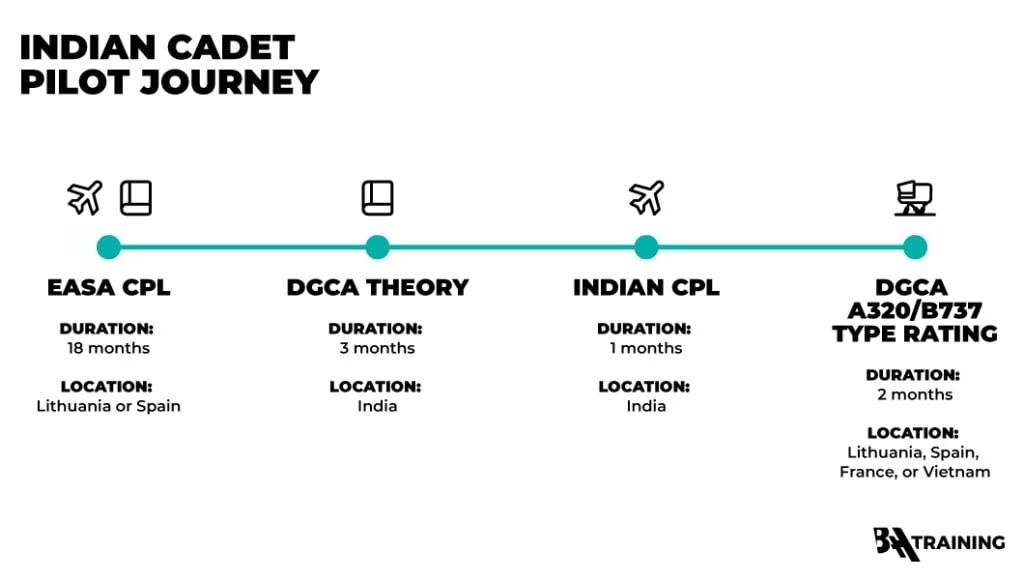
As a result, with so much international experience, they end up equipped not only with the technical skills but also with the cultural adaptability and strong regulatory knowledge needed to excel in various aviation environments. And… A dual EASA-DGCA license! This means that if they ever seek employment in any of the 27 EU countries, it will be a much easier process than if they completed all their training from the beginning to the end in India.
Quality and Safety — Top Priorities
In 2023, former DGCA chief Arun Kumar pointed out that around one in three trained pilots in India are jobless, which amounts to more than 4,000 CPL holders. According to Business Today, many of these pilots are not just unemployed but also deemed unemployable due to inadequate training and lack of experience. This hints that the training they received was of dubious quality.
When it comes to BAA Training and our Indian cadet program, the focus is always on the unwavering commitment to maintaining the highest quality in every aspect of our training and operations. This is a source of great pride for us, and it’s the reason our graduates are highly competitive in the market and sought after by airlines. We understand that the quality of training is paramount for aspiring commercial pilots, and we are dedicated to ensuring that our cadets meet the highest standards required for this demanding career.
Decent Student-Instructor Ratio
While many flight schools have a ratio of one instructor to 12 or more students, BAA Training takes a different approach, prioritizing personalized attention and optimal learning conditions. With a ratio of one instructor to up to five students, we ensure that each aspiring pilot receives individualized guidance and a more effective learning environment.
Advanced Aircraft Fleet
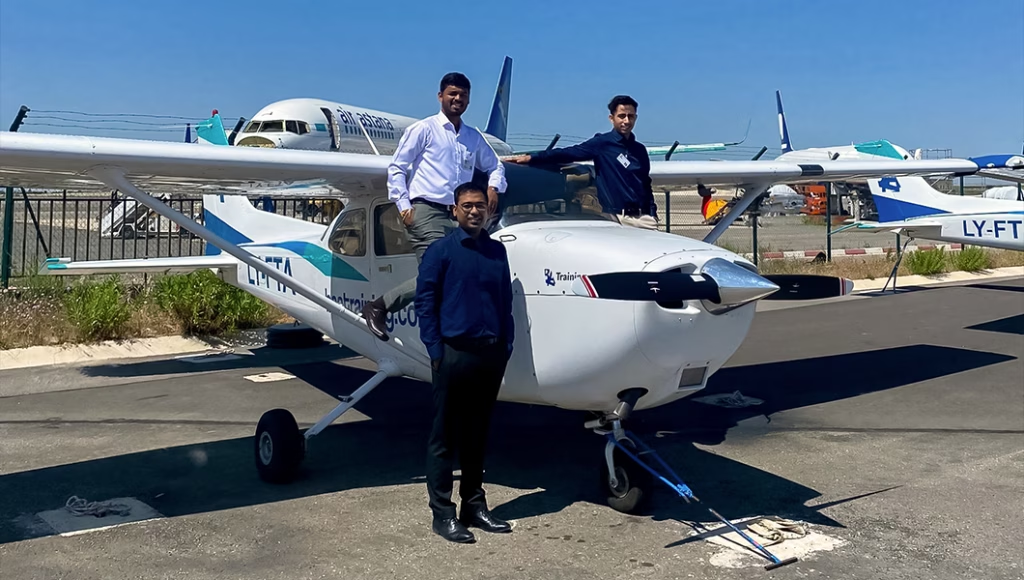
For many students, the aircraft fleet is a key criterion when choosing a flight school. And it should be! In India, the majority of flight schools train their students on Cessna-type aircraft, based on publicly available information on their websites. However, BAA Training stands out. We train our students on the most advanced and reliable type – the Cessna 172S. This superior aircraft, often outperforming the Cessna 152, Cessna 172A, or Cessna 172R used by other schools, reinforces confidence in our students.
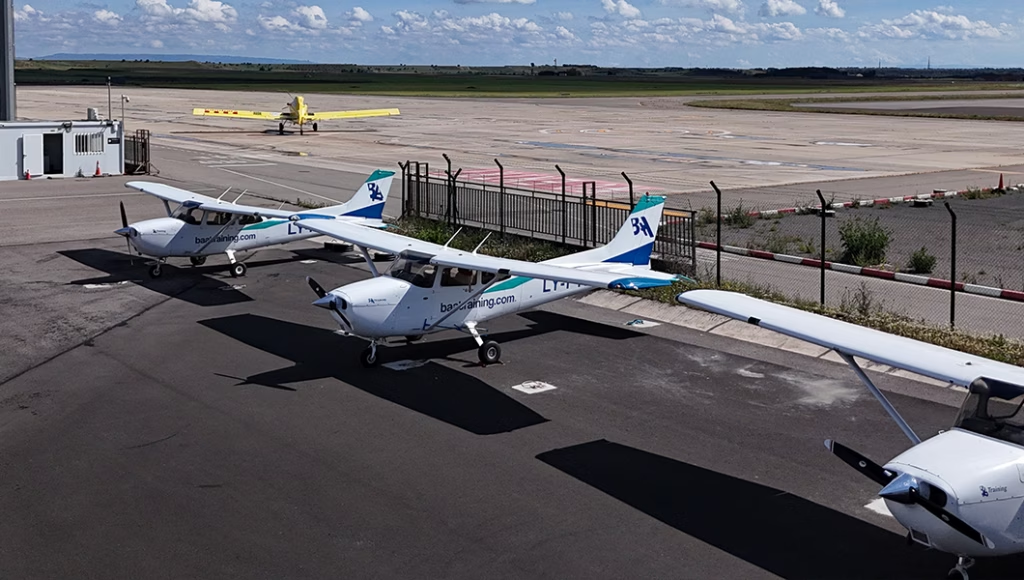
Modern avionics systems like the Garmin G1000 that Cessna 172S boasts are great for student pilots because they integrate many instruments into easy-to-read displays, enhancing situational awareness with moving maps, traffic alerts, and weather information. Automation features reduce pilot workload, allowing students to focus on learning to fly. Students also get prepared for advanced technology used in commercial and private aircraft, while clear warnings and alerts help reduce errors and promote safer flying habits. Overall, these features make flight training more intuitive, efficient, and aligned with current aviation standards.
Instructors Who Are Pilots at Leading Airlines
Recent news headlines in Indian newspapers have been alarming, highlighting the trend of flight schools shutting down due to a shortage of instructors. Those that manage to stay open often rely on inexperienced training graduates, fresh starters already teaching the next generation of pilots. This not only jeopardizes the quality of education for students who pay lump sums for training but also endangers lives — both of the students and those they will carry as employed First Officers in the future.
In contrast, at BAA Training, all ground and flight school instructors bring an impressive array of expertise, holding Bachelor’s, Master’s, or Ph.D. degrees and coming from multiple countries. Equally important to their educational background and cultural versatility is their active experience in flying as First Officers and Captains while instructing at BAA Training. This ensures that they stay current with industry standards and provide top-tier training.