Is it just a couple of flights and a few hours airline pilots work per week? What does it depend on? Can commercial pilots make any impact on their rosters, or is it solely in the hands of the company?
EASA Work Hour Regulations
First and foremost, beyond the personal will of pilots and their companies’ policies, there are regulations that place great importance on pilot fatigue management and maintaining high safety standards. To ensure this, regulatory bodies such as the European Aviation Safety Agency (EASA) have established guidelines for pilots’ work hours.
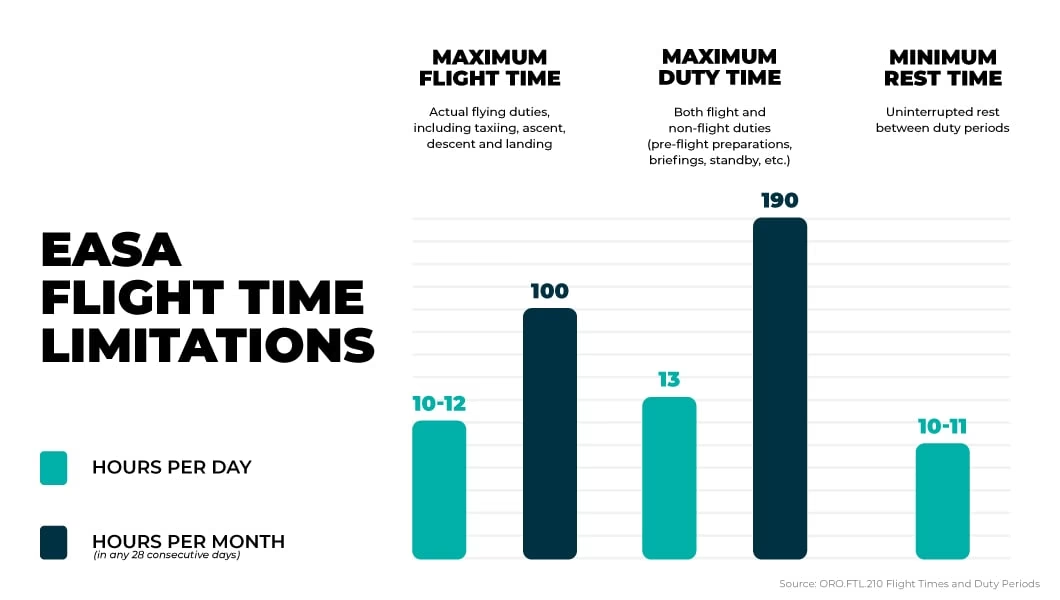
According to EASA regulations, pilots involved in multi-pilot commercial operations are limited to a maximum of 10 hours of actual flight time per day, which can be extended to 12 hours under specific conditions, such as the time zones crossed, the number of single flights from one airport to another and operational requirements. The allowed number of flight time per month is 100 hours which is also strictly regulated.
However, don’t forget that apart from actually flying, pilots participate in briefings, perform walkarounds, set up the aircraft, perform post flight duties and handle various other tasks. All these non-flight activities, combined with their flight duties, make up a flight duty period (FDP). According to European Flight Time Limitations (FTL), the maximum limits for duty periods are 13 hours per day and 190 hours per month.
The Federal Aviation Administration (FAA) has similar work hour limitations to EASA with slight differences.
Commander’s Discretion
While the FDP is always planned, allowing pilots to take control of their time management and flight planning, in unforeseen operational circumstances, such as an unexpected delay, airline transport pilots (Captains) are permitted to extend the FDP by up to 2 hours at the Commander’s Discretion (‘CD’) or even 3 hours if in-flight rest facilities are provided.
Rest Periods Between Duty Periods
EASA regulations also outline requirements for rest periods between duty periods to mitigate fatigue that can affect a pilot’s performance and enhance in-flight safety.
Pilots have a legal right to have a minimum of 10-11 hours of rest between two consecutive flight duty periods.
Some airlines introduce their own policies about the minimum number of hours for rest between duty periods as they may consider it sensible to allow their pilots more time to recover.
How Many Hours Pilots Actually Work?
Although the regulations have specific minimum and maximum numbers, it is difficult to determine the actual number of hours pilots work. A commercial pilot might have a varying workweek depending on the arrangement of their rest periods and days off.
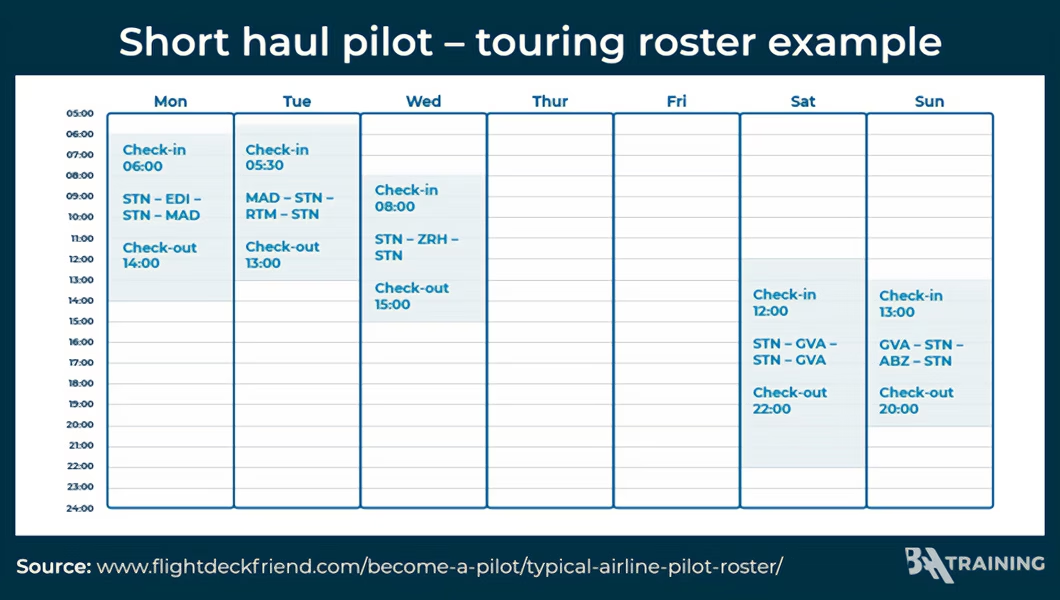
For instance, in one week, a short-haul pilot may have a workload of 5-6 days with multiple flights per day, followed by another week where they only work 1-2 days doing a few flights. But generally speaking, short-haul pilots work approximately 70-90 flight hours per month on average.
A commercial pilot operating a long haul flight or a mid haul flight may be on a more extended duty period due to the duration of this journey (doing international flights, for example), which consequently requires a more extended rest period afterwards. Long-haul pilots usually work more flying hours monthly than short-haul pilots, approximately 80-100 hours.