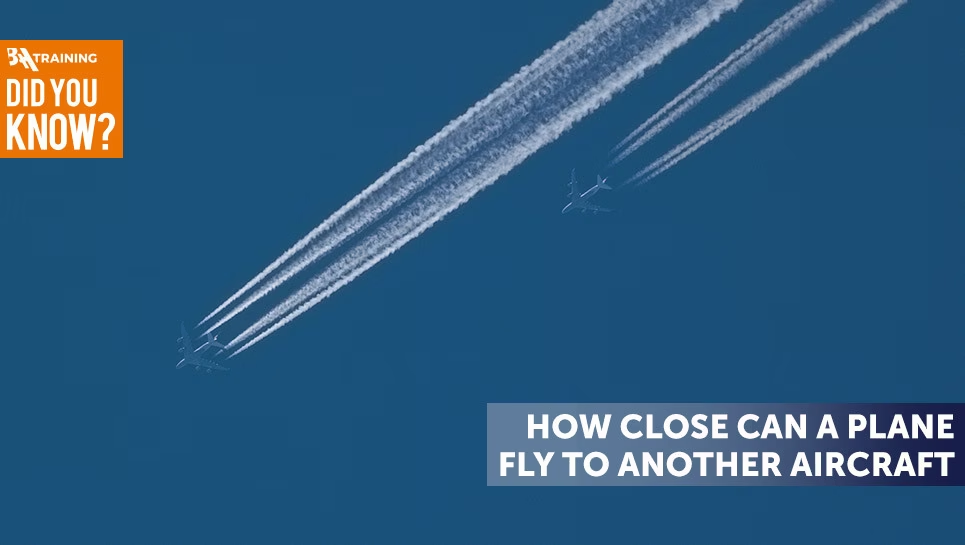
If you are a frequent traveller who enjoys a window seat, you might have noticed other aircraft while in air. Flying in the crowded skies over Europe or North America, it is quite common to see other aircraft whizzing past, either above or below. Have you ever wondered how close to each other can aircraft fly?
The distance between two flying commercial aircraft may vary at different flight phases and at a different altitude ─ during a takeoff and landing or at cruise altitude. This vertical and horizontal aircraft separation is under control of the specific aviation regulations and may vary in different regions. There are well-established rules to dictate the space that must exist between two aircraft at all times. What is the distance for flying aircraft set by the regulations?
Commercial aircraft flying below 29,000 feet must maintain a vertical separation of 1,000 feet. Any higher and the separation increases to 2,000 feet, except in airspace where Reduced Vertical Separation Minimum (RVSM) applies. RVSM approval allows aircraft to fly with a vertical separation of 1,000 feet reduced from 2,000 feet between FL290 and FL410 inclusive. Over the ocean, beyond radar coverage, the vertical separation minimum can be a little as 1,000 feet.