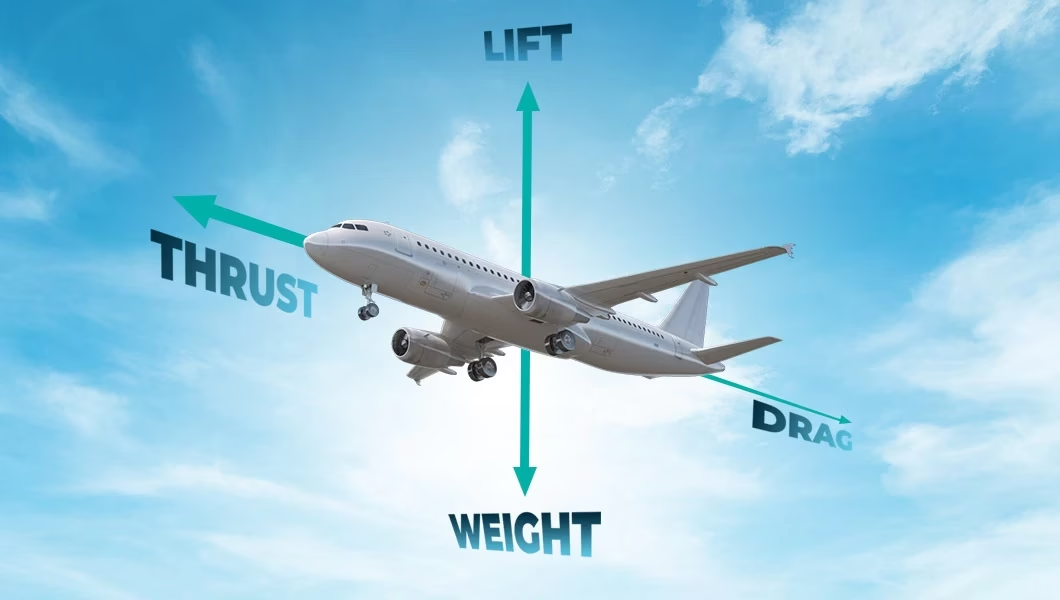
So, what makes an airplane fly, then? It all comes down to four invisible forces constantly negotiating midair – lift, weight, thrust, and drag. These aren’t just technical terms from a textbook. They’re the choreographers behind every smooth takeoff, steep climb, and graceful landing. Let’s pull back the curtain on the physics that make flight possible – and yes, a little magical too.
What Is Force?
Before we get into how airplanes stay aloft, let’s talk about forces – not the sci-fi kind, but the everyday kind. A force is any push or pull that gets things moving, slows them down, or changes their direction. You feel it when you shove a heavy suitcase into an overhead bin or when your bag resists being dragged through the terminal.
In aviation, forces shape every second of flight. Whether an aircraft lifts off smoothly or struggles against the wind comes down to how these forces interact – and whether they’re cooperating or clashing.
How Do Airplanes Stay in the Sky?
So, now that we’ve met the four forces, how do they all come together to make an airplane fly? Think of it like a very precise game of tug-of-war – except it’s happening in all directions at once.
Lift pulls the airplane up, weight pulls it down, thrust moves it forward, and drag resists that forward motion. For an airplane to take off, the engines (or propellers) need to create enough thrust to overcome drag, and the wings need to generate enough lift to beat gravity at its own game. When these forces are balanced just right, you get stable, controlled flight. Too much drag? The plane slows down. Not enough lift? Gravity wins. But when everything clicks – when thrust overpowers drag and lift overcomes weight – you get the magic moment where metal leaves the Earth and becomes airborne.
The Four Forces of Flight
At the core of aerodynamics are the four forces that act on an aircraft: lift, weight, thrust, and drag. These forces are in constant interaction, and understanding them is key to flying.
Lift
Lift is the upward force generated by an aircraft’s wings. It acts perpendicular to the relative wind and opposes weight. But to really understand lift, we need to first talk about air.
Air may be invisible, but it’s made up of molecules that have mass. That mass means air has weight, and because of that, it applies force. The shape of the wing, known as an airfoil, plays a crucial role in creating this lift.
Enter: Bernoulli’s Principle. This scientific concept states that faster-moving air has lower pressure, and slower-moving air has higher pressure. The curved upper surface of the wing causes air to speed up as it flows over the top, creating lower pressure above the wing than below it. This pressure difference is what lifts the airplane into the sky.
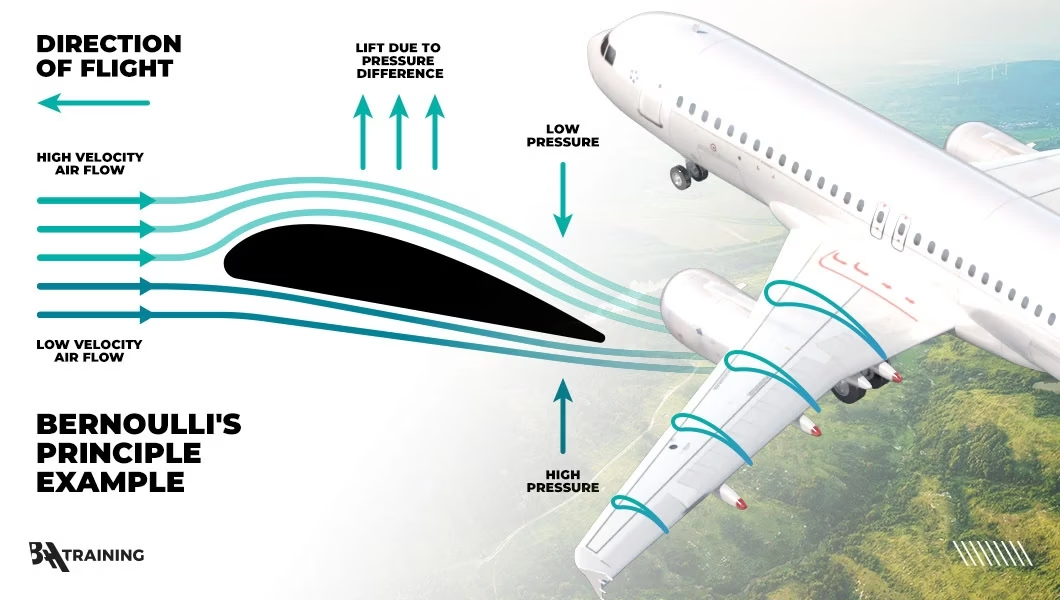 How Bernoulli’s Principle works.
You can try this with a simple experiment: take a strip of paper and blow over the top of it. The paper lifts – that’s Bernoulli in action.
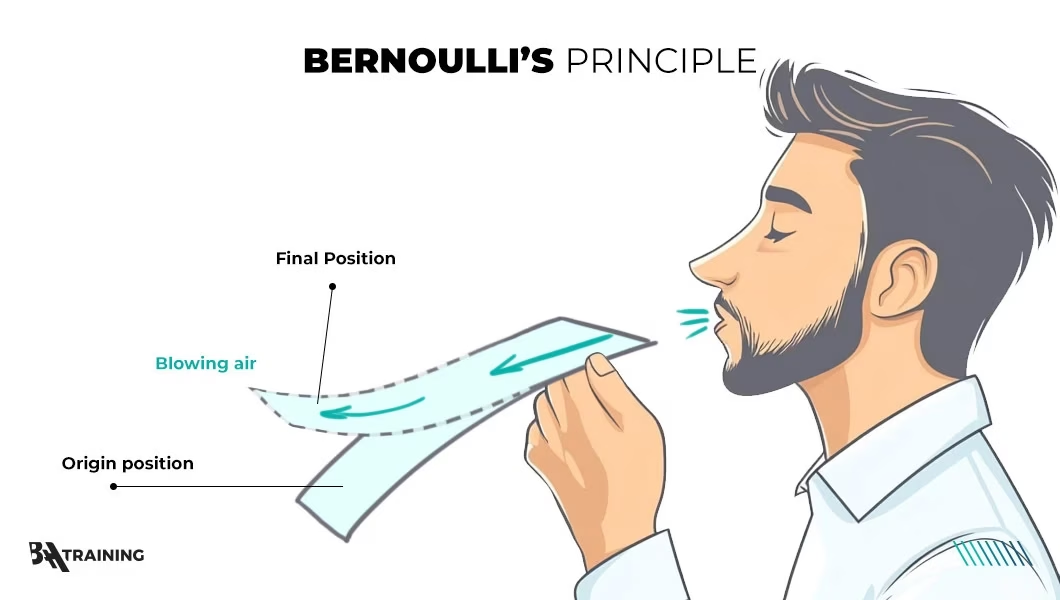 A Bernoulli’s Strip experiment to see the lift in action.
Pilots also control lift by adjusting the angle of attack (AoA) and airspeed. More angle, more lift – up to a point. Beyond that, the airflow breaks down and the wing stalls (we’ll cover that below). Air density also matters; high altitudes and hot or humid conditions thin the air, which affects how much lift is generated.
Weight
Weight is the force of gravity pulling the aircraft toward the Earth. It acts through the center of gravity (CG) – a crucial point that affects balance and stability.
Managing weight is equally about how much you’re carrying and how it’s distributed. For instance, the position of the CG changes as fuel is consumed. On short flights, this shift is minimal. But on long-haul operations, an out-of-balance CG can affect handling, increase fuel consumption, or even lead to unsafe conditions.
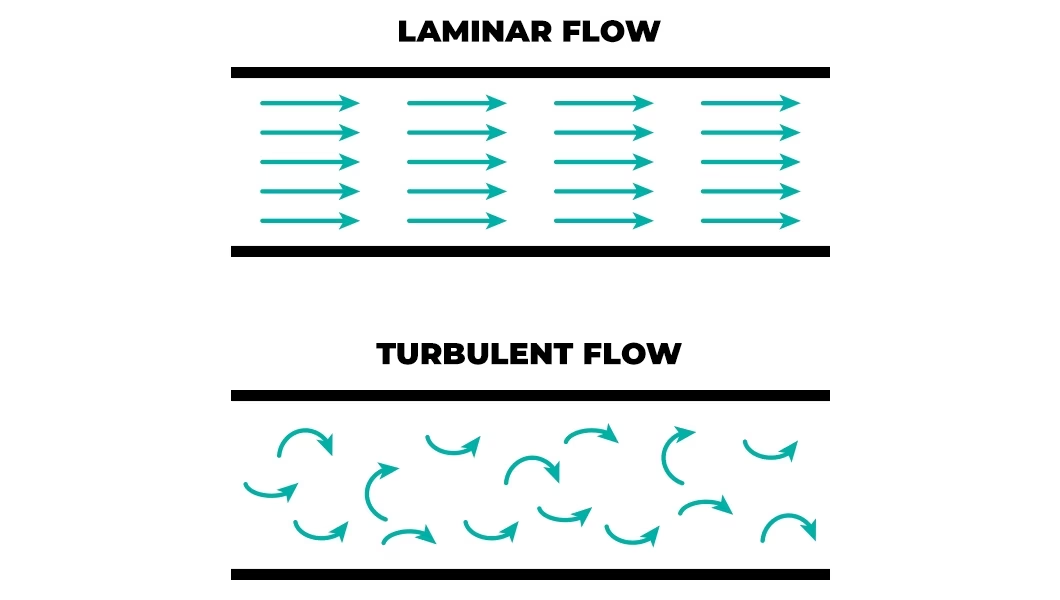 Laminar and turbulent flows visualized.