If you hadn’t pursued aviation, what career path would you have chosen?
My journey to becoming a professional pilot has been far from conventional. Although I earned my commercial pilot’s license in the US at the age of 20, my career took an unexpected turn, leading me into the world of telecom and IT. However, my passion for aviation never left my soul. Eventually, I decided to turn my life upside down and pursue the aviation career I had always dreamed of.
While I immensely enjoyed my previous professional experiences and found them deeply fulfilling, I’ve come to realize that there are strong parallels between both fields. Both are driven by a love for challenges and the opportunity to explore new places while connecting with diverse people and cultures along the way.
What is one piece of advice you wish you had received when starting your journey in aviation?
I wish someone had told me about the importance of building patience and staying focused on what truly matters. This applies not only during training but also when searching for a pilot job. Aviation is a long-distance race, not a sprint, requiring perseverance. I advise aspiring pilots to trust the process and keep pushing forward. Additionally, I believe mentorship programs are incredibly valuable, especially for pilots who have just completed their training, as they provide guidance and support during the challenging early stages of their careers. I recommend looking for someone who could fulfill such a role.
How do you tailor your teaching methods to students with different learning styles or cultural backgrounds?
I always try to really get to know my students by asking about their background—whether it’s their studies, work experience, or what motivates them to become a pilot. Thanks to my previous professional experience and my degree in Eastern Asian Studies, I feel confident connecting with various cultural backgrounds. That said, I’ll admit that teaching flight training can be a bit of a challenge when it comes to communication. It’s crucial for both sides to be on the same page, and depending on the student’s culture, I might adjust my approach to reduce any perceived hierarchy, building a relationship based on trust. In the cockpit, we must be in sync, working together as a team.
I’m always observing my students during the flight, reading their stress levels, enthusiasm, and energy to make sure they’re getting the most out of the session. I plan each flight in advance, breaking it down into 15-minute time slots, especially for the more complex lessons. Some students thrive on being challenged throughout the session, while others need to slow down and take a breath. Flight training is dynamic—weather conditions play a huge role, too—so I adjust the session on the fly to ensure each student’s learning experience is as effective and engaging as possible.
What do you think sets BAA Training apart from other flight schools?
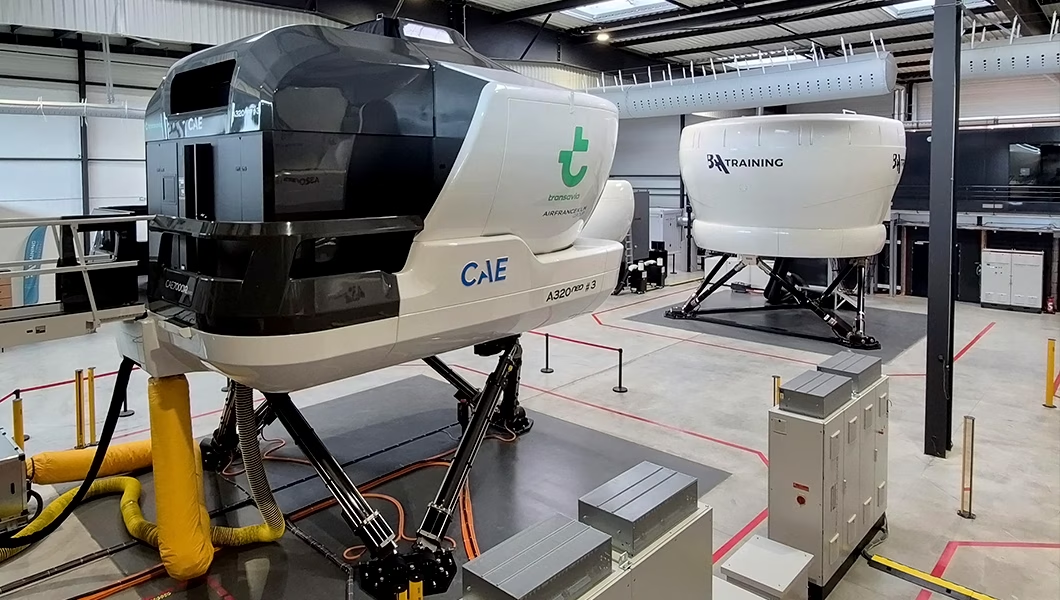
What truly sets BAA Training apart from other flight schools is our connection to a major aviation player like Avia Solutions Group. Being part of such a prominent organization gives us a unique advantage, as it has instilled an airline-minded approach to our training, with a strong focus on adherence to SOPs and a relentless drive to be recognized as one of the best flight schools out there. Thanks to the significant investments made by the group, BAA Training is equipped with the latest and best technology, supporting everything from Ab Initio to Type Rating.
Most importantly, I believe our instructors are a key differentiator. We have a highly skilled, diverse team from various nationalities, all with extensive aviation experience. We are completely dedicated to our students’ success and passionate about what we do – and it shows. As a student pilot, I truly appreciated how much my instructor cared about my growth, delivering real value for the investment I made in my training. That’s the kind of dedication and quality you’ll experience at BAA Training.
What’s the most challenging aspect of being a flight instructor, and how do you overcome it?
For me, the toughest part of being a flight instructor is when a student gets stuck on a particular aspect of their training. We might go over the theory multiple times, review the technique, and I’ll provide tips on how to improve, but sometimes things just don’t click in the air. When that happens, I dive into additional resources—books, videos, anything that might help—and I also reach out to my fellow instructors and other experienced pilots for their advice.
Sometimes, a simple change of instructor can make a world of difference. It can shake things up and offer a fresh perspective that leads to that “aha” moment. I also believe it’s important for students to learn from the different approaches we all bring to the table. Every instructor has their own unique style, and being exposed to various teaching methods can really help students grow.