What first sparked your interest in aviation?
I first flew when I was 8 years old, on board an Airbus A340-300. I still remember that flight today… the power of the takeoff, the feeling of accelerating, the sound of the roaring engines, and the view above the clouds. The peace of it all took my breath away, and from that day onwards I knew I wanted to spend more time up there!
Can you describe your flight training philosophy?
We train our students to take command of an aircraft and its occupants. From the first day, we teach them how to be leaders, how to make decisions, how to think many steps ahead, and to consider the far-reaching impact of their decisions. We teach them how to take responsibility, how to be honest, how to examine every detail, how to follow procedures, when to be flexible, and when to be assertive. In short, we train pilots for command. Even though it might be years before they become captains, we still need to plant the seed of leadership on day one. We nurture that seed inside our students every day, ensuring that we ground those principles in a mindset and a culture that emphasizes safety at every turn. In flight training and aviation, safety is above all else.
What is your position at BAA Training, and what exactly do you teach?
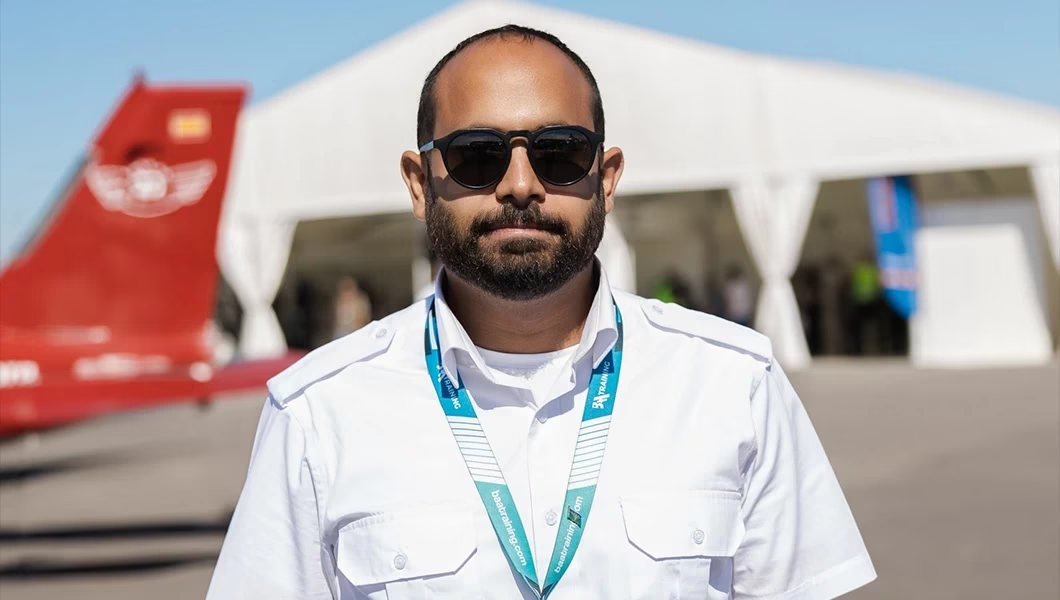
I’m the deputy chief flight instructor for initial pilot training at BAA Training, and I teach ATPL Integrated theoretical and practical training. To be specific, I teach the initial visual flight phase (VFR), the night visual flight phase (NVFR), the instrumental phase (IFR), and the final multiengine phase (ME).
Describe your team in a few words.
I oversee a highly experienced team of instructors, spanning over 10 nationalities and ranging from 24 to 55 years of age. Some have dedicated their lives to flight instruction, while some have had airline careers alongside their work in training. Our instructors have anywhere between 700 to 8,000 hours of flight experience, and their main responsibility is providing high-quality flight training and mentorship to students. This involves creating an easy learning environment and – most importantly – emphasizing the maximum level of safety at all times during flight training.
What does a typical work day look like for you?
Instructors usually start our days very early: we arrive at the airport before sunrise, meet our students, check the weather and the notices about the airports we plan to use, discuss the flight, and then perform a briefing about the plan for the day. After all of these checks have been completed, we head to the aircraft and inspect it very carefully to ensure that it’s ready for flight. Once we’ve made sure everything is as expected, we begin the flight, which usually lasts from 1 to 3 hours. After the flight, we refuel the aircraft, park it, and tidy up – essentially just making sure that we haven’t left any trash behind. This way, we leave the aircraft clean, refueled, and ready for the next crew. Then we head back to the briefing room to debrief and discuss feedback with the student. We repeat this process for 2 or 3 flights a day, usually finishing around sunset. Some days we perform night flights, so we start later and finish after midnight, but that isn’t a common occurrence.
Are there any memorable experiences that stand out from your time instructing students?
I have lots of memories from my time spent with students – many good, many stressful! I remember one particular flight involving 2 students flying a multiengine aircraft. We left Sabadell airport and we were heading back to Lleida, our home base, with these huge thunderstorms chasing us from behind. We were perfectly safe, but we were all taking pictures of the massive wall of cloud behind us as it poured out rain and threw down lightning bolts. It was a beautiful feeling, seeing the power of nature up close while safe and warm in the cockpit.
Another time, I was flying with 2 students when I decided to show them the Pyrenees mountains. We flew through the valleys, with snow-crested mountain ridges either side of us, 11,000ft-peaks towering up towards the clouds, and soaring eagles punctuating the glorious backdrop. The students couldn’t stop taking photos – it was so beautiful!
Now that I recount these experiences out loud, I’m aware that it might not sound like we do all that much teaching! Rest assured: we’re constantly instructing our students, but inevitably when your office involves seeing the world from above, there are moments that just have to be savored. That’s what we signed up for, after all!