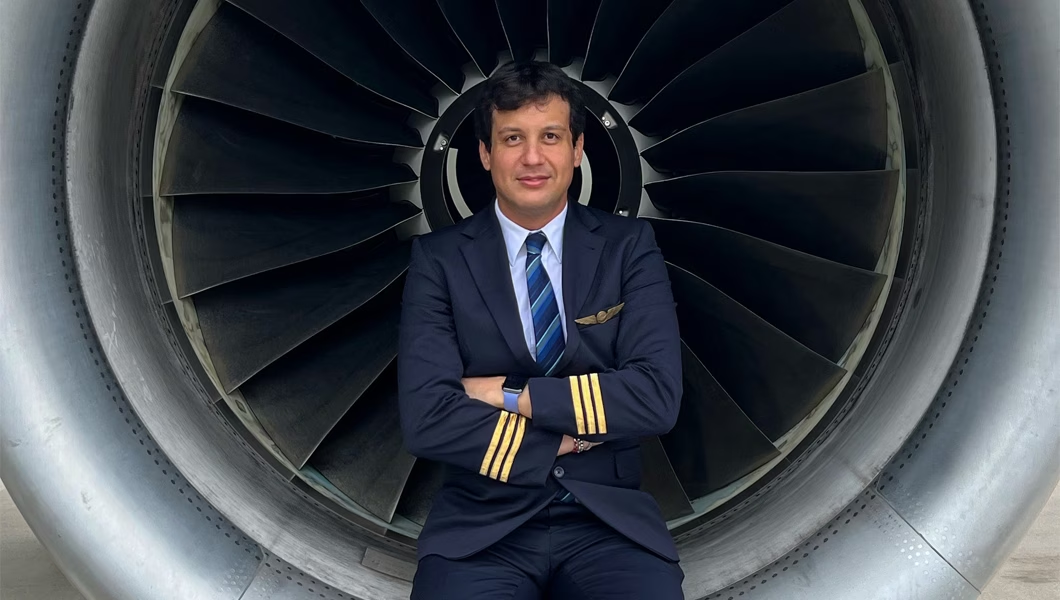
Although all this indeed plays its role, pilots shoulder a significant level of responsibility every time they’re on duty.
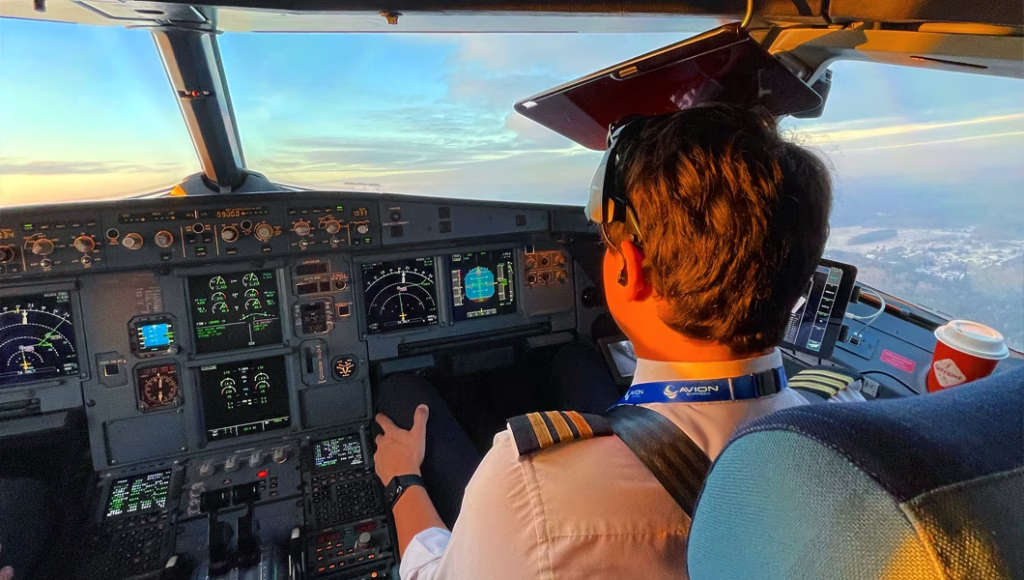
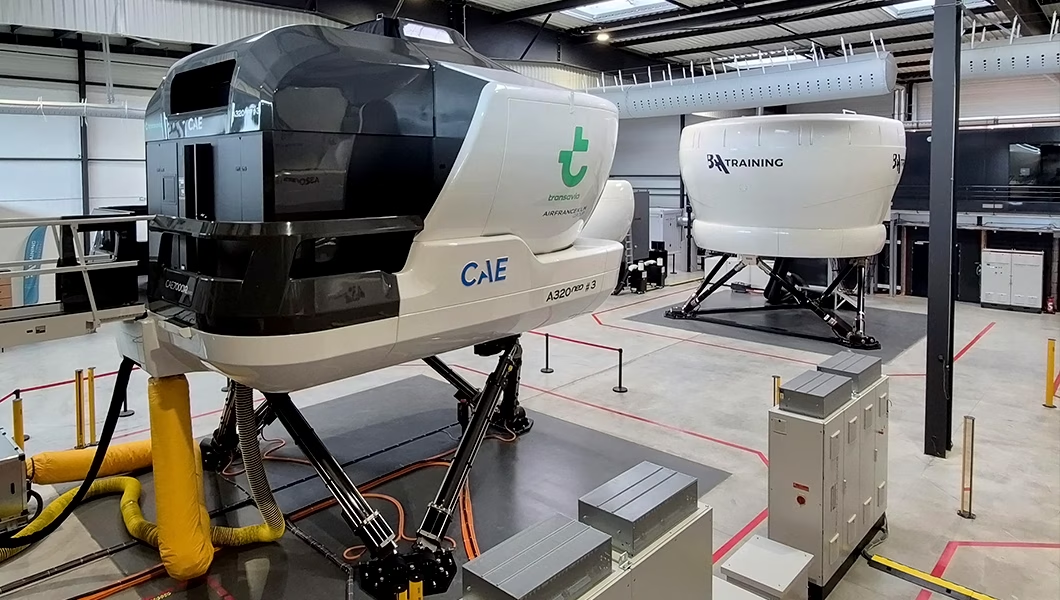
Rida Rais, A320 First Officer at Avion Express, who regularly undergoes his LPC/OPC at BAA Training, agreed to tell us about his day in the life of a commercial pilot. He has shared how his daily routine at work looks and mentioned critical insights into what it’s like to be a pilot.
Daily Pilot Routine
Some days for pilots are less intense, while others are more demanding. In either scenario, the sequence of events on a typical day of a pilot remains quite similar. When they are assigned a flight, they prepare a few hours before departure, travel to work, hold a briefing with other crew members, operate the flight, complete mandatory post-flight procedures, return home, potentially socialize or devote time to their hobbies, and have some proper rest again.
Now, let’s analyze each stage separately to reveal better what the job entails.

Rest
Sufficient and quality rest is very important for pilots to be mentally sharp and alert. They have to remain good decision-makers during flights to maintain the safety of passengers and crew, so sleepless nights aren’t something they can afford.
“After a flight, I shower, have a meal, and relax at home," shares Rais. "Typically, I sleep an average of 8 hours, although it might be less on early morning duty days and more during my days off. I prioritize a healthy diet with balanced nutrition and plenty of vitamins. Additionally, I exercise 3 to 4 times a week, including running and other workouts, to keep myself fit.”
While maintaining a healthy lifestyle positively affects your immune system, pilots are also human, and believe it or not, they can fall sick or feel not fit to fly, just like any of us. In this case, they reach out to a crewing department, warning them about the situation. When it happens, the company activates the duty of a pilot who is on “standby” that day. It means that the “standby pilot” has to be at the airport within 60 min from the moment they have been called.
Sometimes pilots are called for a last-minute flight, for example, to ferry an airplane from one place to another, or if someone has reported sick. But generally speaking, 90% of the time, they don’t get called, at least from Rida’s experience.
Personal Preparation
Taking preparation seriously is a critical component of a pilot’s responsibility, ensuring they are ready to face the challenges ahead and conduct their flight successfully.
“I usually begin preparing for the flight a few hours before departing from home. The airline equips us with an iPad, granting access to all necessary flight information. First and foremost, we download our flight plans, which are generally published 3 hours prior to departure.
“We check details like passenger count, baggage loading, aircraft weight, and fuel required for the journey from our base to the destination. Additionally, we review the weather forecasts for departure, destination, and alternate airports, assess the aircraft’s status, and perform calculations for its takeoff and landing performance at the destination,” explains Rida Rais.
Commuting to Work
Pilots are usually required to show up at the airport 70 minutes before their scheduled departure (takeoff) to meet with the crew for the pre-flight briefing. However, the reporting time might vary, slightly earlier or later, depending on the specific base and the airline the pilot operates for.
Some pilots travel to work using their personal cars, while others prefer public transportation, such as taxis, trains, or buses. Alternatively, airlines may provide transportation options or reimbursement for commuting expenses, especially if pilots need to travel long distances.
Pre-Flight Preparation
Once at the airport, meticulous flight preparation begins.
According to Rida, pilots meet with the crew in the briefing room, introduce themselves, and then, together with their co-pilot, thoroughly review the flight details. They study the flight plan, weather conditions, NOTAMs, flight duration, performance parameters, fuel consumption, and other crucial aspects.
Once done, pilots update the Flight Attendants, providing the correct flight information, such as the flight duration, passenger count, weather conditions, and the planned route, as well as instruct them about the behavior in normal and abnormal scenarios.
Upon reaching the aircraft, roles are assigned based on who will be flying during this particular sector (a flight route between two points). The flying pilot proceeds with pre-flight checks in the cockpit while another pilot conducts an external walk-around and records all relevant information on the company iPad.

Flight
Now we’ve got to the most interesting part – the flight itself. While passengers stay connected with the cabin crew during the flight, what actually happens in the flight deck remains “behind the scenes”, so they are usually unaware of the operational techniques of the flight. We’ve asked Rida to unveil this “mystery”:
Q: What is the most challenging part of the flight and why?
"Takeoff and landing are the most challenging phases of the flight because they require a highly concentrated effort from pilots. We have to fly the plane, monitor all the engine parameters, and be ready to take action if something wrong occurs unexpectedly.
"In addition to the standard challenges, factors like strong winds, short runways, or adverse weather conditions can significantly amplify the complexity of these phases. For instance, for landing, keeping the plane flying on the landing path can be challenging during a strong crosswind."
Q: Is it always easy to understand the ATC?
"The ATC (air traffic controllers) phraseology follows standardized protocols. We listen carefully to ATC transmissions and cross-check instructions. If anything is unclear, we can always double-check. ATC communication is typically well-structured, although there can be some complex moments. Nevertheless, through proper training, attentiveness, and practical communication skills, we ensure a safe and smooth interaction."
Q: How frequently is autopilot utilized?
"Autopilot is used for the major part of the flight, mainly to reduce the workload of pilots. It allows us to monitor the flight’s progress, communicate with ATC, and manage other essential tasks without compromising safety.