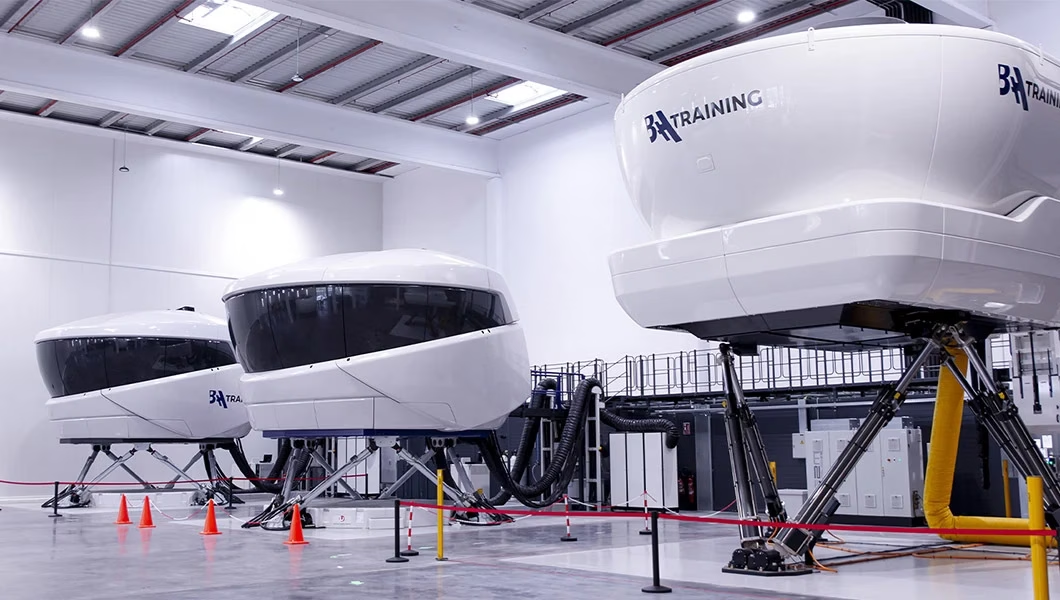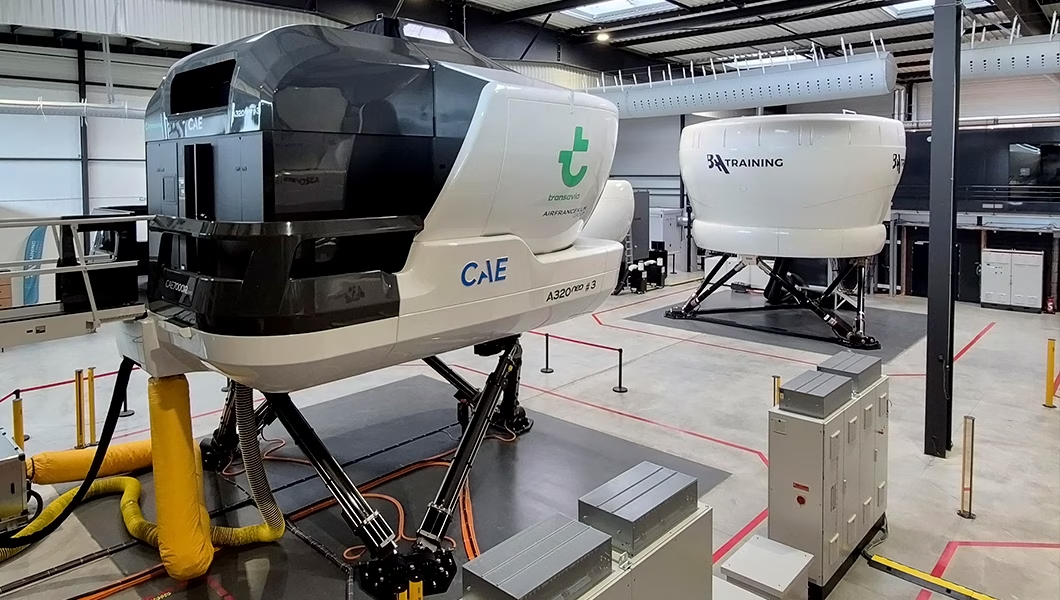
But with more European carriers, such as Wizz Air, Ryanair, and easyJet, making it a requirement for their pilot recruitment, the landscape for new pilots gunning for First Officer roles has now started to change, says Danielle Roos, Chief Theoretical Knowledge Instructor at BAA Training, one of the leading global aviation training organizations delivering both Ab Initio and Type Rating training.
APS MCC as a new standard
Adoption of APS MCC accelerated significantly between 2021 and 2024, when the previously mentioned European low-cost carriers (LCCs) began specifying APS MCC as a preferred or required qualification in recruitment. This reflected airlines’ growing focus on recruiting pilots who are already familiar with airline-style operational environments. According to Roos, it can lead to improved Type Rating success rates, reduced training adaptation time, and enhanced overall training efficiency.

“While the standard preparation for airline-bound pilots – the combination of Multi-Crew Cooperation (MCC) and Jet Orientation Course (JOC) – provided important foundational skills, it was typically delivered in a generic training environment that didn’t fully replicate airline-style operations,” she highlights. “The MCC and JOC were conducted as separate modules, and training scenarios weren’t always structured around realistic airline operational workflows, Standard Operating Procedure (SOP) integration, or line-oriented flight scenarios. APS MCC represents an evolution of this model.”
The APS MCC integrates and expands both MCC and JOC elements into a single, airline-oriented framework, placing greater emphasis on airline-style SOPs and competency-based training, aligned with modern airline methodologies like Competency-Based Training and Assessment (CBTA) and Evidence-Based Training (EBT), among other key areas.
“It’s been proven that such an integrated approach better prepares pilots for the operational and procedural demands of the modern airline environments,” notes Roos.
LCCs seen as the early-adopters
Why was it that the LCCs were the early adopters of APS MCC rather than legacy carriers? According to Roos, low-cost carriers are structurally incentivized to optimize training efficiency and reduce operational risk during pilot induction.
“Factors like operational standardization, reduction in Type Rating risk and costs, competency-based training alignment, and higher training output requirements affect LCCs on the regular, and they need to find ways to optimize all of this. Legacy carriers, on the other hand, historically have relied more on integrated cadet programs or internal training pipelines. Now, however, they are set on integrating APS MCC as well.”