Hypothesis 1:
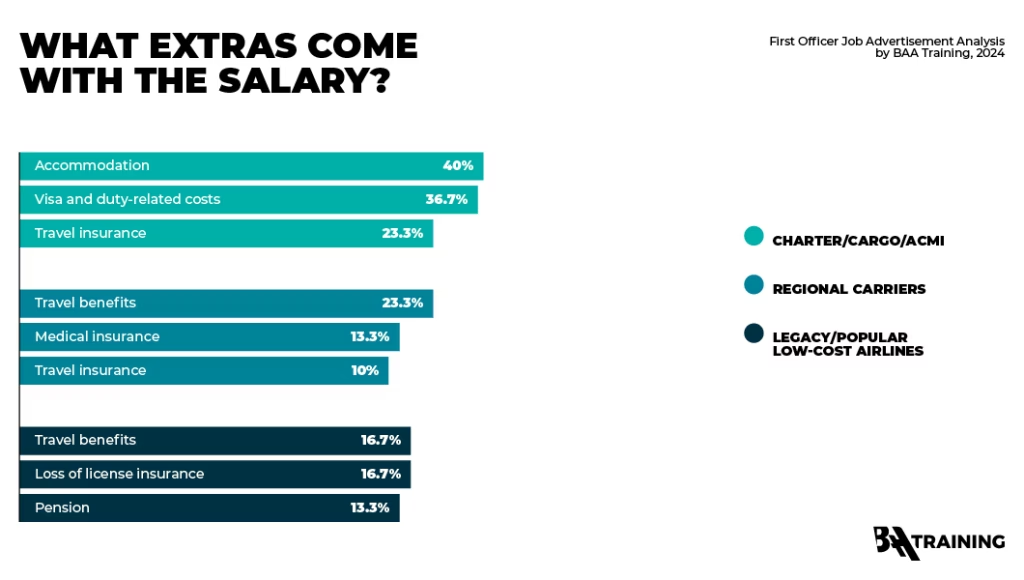
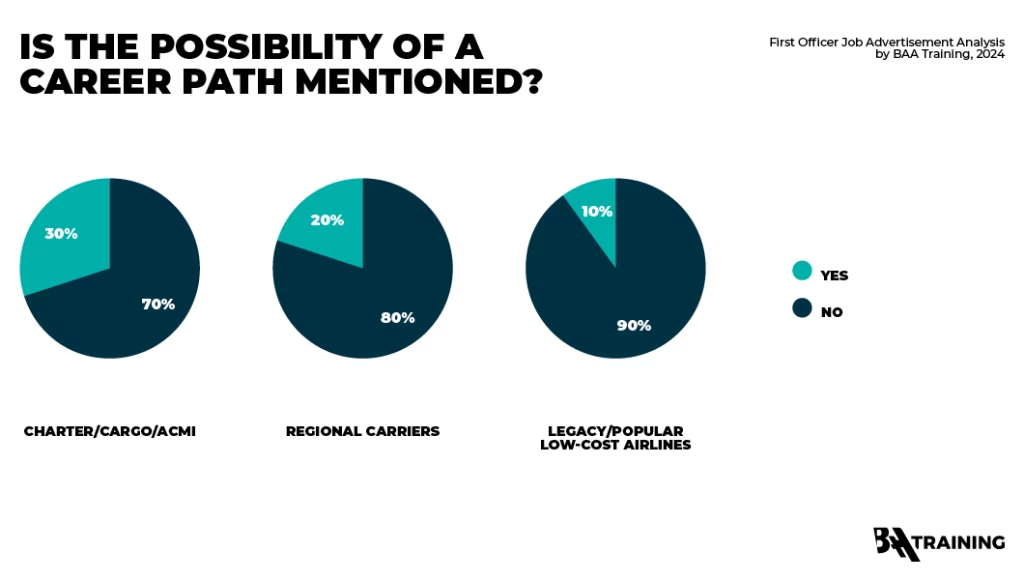
We’re hypothesizing that the expected shortage of 449,000 pilots in Europe by 2041 (as reported by Boeing) is already causing airlines to offer more appealing working conditions. Potentially, even sponsored Type Ratings to attract new employees for their ever-expanding fleets. The airline competition is fierce, the supply of pilots does not meet the demand, passenger travel demand is rising, and new aircraft are being ordered. All of this creates the perfect environment for new and current pilots to secure better working conditions than ever before.
Hypothesis 2:
Attracting more potential new hires could theoretically be achieved not only by improving the “what we offer” package, but also by lowering the minimum acceptance criteria. However, given that the industry is highly regulated and any compromise at the commercial pilot selection stage might jeopardize airline operations and reputation, not to mention passenger safety, another hypothesis is made: the shortage does not lower the bar for candidate requirements.
Data gathering and analysis
Aiming to identify the airline First Officer position requirements and offerings in Europe, we have thoroughly analyzed 90 recently posted airline job ads. We also aimed to compare and contrast any emerging trends across different types of airlines (legacy/popular low-costs, ACMI/charter/cargo, and regional). Based on our findings, we provide recommendations for aspiring First Officer pilots to enhance their competitiveness in the job market.
Apart from the airline companies’ official career pages, the following websites were used for analyzing the job ads:
- https://www.aviationjobsearch.com
- https://www.aviationcv.com/
- https://pilotsglobal.com
- https://www.aviationjobs.me
- https://www.allflyingjobs.com
- https://www.latestpilotjobs.com
- https://jobs.flightglobal.com
- https://www.linkedin.com
- https://www.pilotjobs.io
- https://www.career.aero
Below is the breakdown of airlines by category, the currently advertised First Officer vacancies of which have been reviewed and analyzed.
Regional: Air Europa Express, Air Dolomiti, Volotea, CityJet, Stobart Air, HOP! France, Wideroe, Air Serbia, TAP Air Portugal, Air Caraibes, etc.
ACMI/charter/cargo: Amapola Flyg Sweden, Avion Express, Electra Airways, Enter Air, Challenge Airlines Belgium, SmartLynx Airlines, TUIfly, RAF-Avia Latvia, DAT, DHL Air, etc.
Legacy/popular low-costs: Air France-KLM, Lufthansa, SAS, Iberia, Lauda Europe, Air Malta, Lauda, Wizz Air, LOT Polish Airlines, French Bee, Austrian Airlines, Transavia France, Luxair, etc.
Certification requirements
Due to the stringent regulations governing the industry, airlines do not have full freedom to create their own criteria for the First Officer position. Instead, they must adhere to minimum licensing, certification, and rating requirements active in Europe:
- Commercial Pilot Licence (CPL)
- English fluency ICAO level 4
- Class 1 medical certificate
- Multi Engine rating (ME) and Instrument Rating (IR)
- Multi-Crew Cooperation (MCC)
- Advanced Upset Prevention and Recovery Training (AUPRT)
However, they can impose additional criteria, which was a central point of the study.
The vast majority of the job ads studied in every of the three categories (legacy/popular low-costs, ACMI/charter/cargo, and regional) mentioned the first three bullet points above.
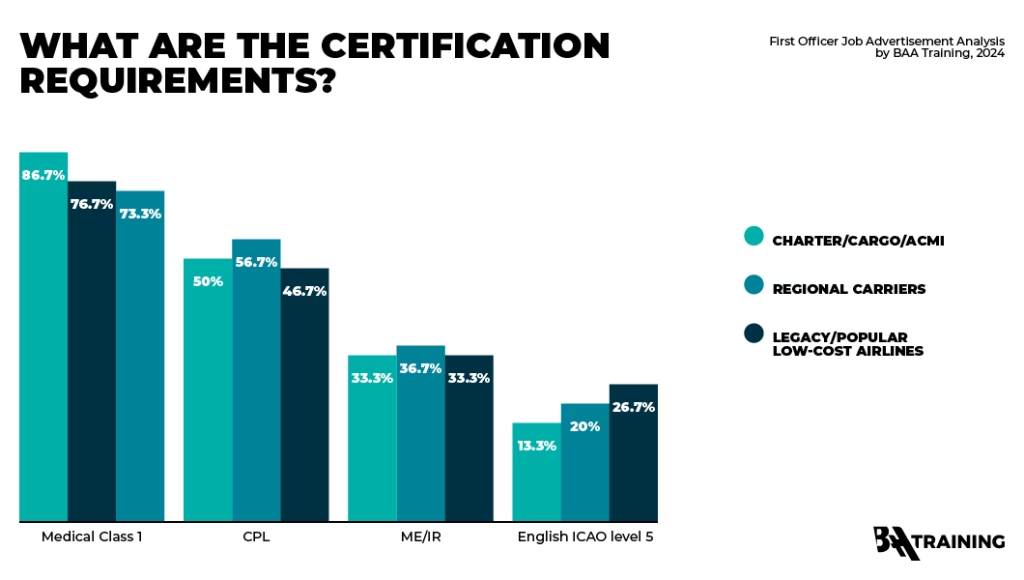
While the remaining qualifications were mentioned less frequently, it can be assumed that they were considered implied, as ME/IR, MCC, and AUPRT are typically included in Ab Initio training syllabuses helping to achieve a CPL license. However, at some schools, modular training programs may omit the MCC and/or AUPRT elements, making it possible to obtain a CPL without them. Therefore, job ads that were more specific enhanced clarity and transparency.
It is essential to note that for aspiring pilots, completing all required courses is mandatory, and opting for a comprehensive package right away is often the most cost-effective and time-efficient solution.
The job ads also indicate that an Airline Transport Pilot License (ATPL) is acceptable in addition to the CPL license, given its higher rank. While a Multi-Crew Pilot License (MPL) is less commonly mentioned in the job ads compared to CPL/ATPL, it may be equally accepted, as there is no regulation prohibiting the change of the operator.
Language fluency requirements
While it is standard practice for most airlines and flight schools to require English proficiency at ICAO level 4 (as evidenced by the research findings reflected in the picture below), the same research has revealed that 17,31% of all job ads prefer candidates to have a higher level of English – ICAO level 5 (with the highest percentage of legacy/popular low-costs indicating it as a requirement).
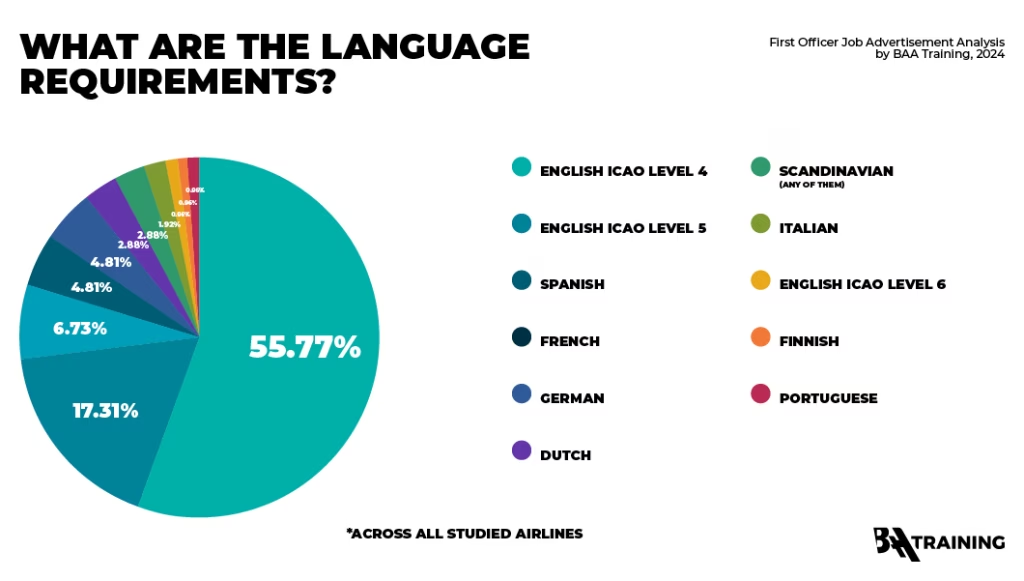
Although this figure may not be the highest, it is still considerable. This suggests that besides technical and soft skills required for airline operations, focusing on improving English proficiency can potentially secure more versatile career opportunities in the long run, especially with longer-established and reputable airlines.
Surprisingly, despite English being the international language of aviation, other language requirements were also found in job ads, albeit as a vast minority. Some airlines prefer candidates who speak the native language of their base country, sometimes even requiring proof such as exam grades. Spanish, French, German, Dutch, Scandinavian (any of them), Italian, Finnish, and Portuguese were among the most commonly listed language requirements.
Personal characteristics requirements
Among the rarest application criteria (each representing less than 4% of the ads) were height (e.g., 160-198cm or above 165cm), age (e.g., born on or after 1983.01.01), and vision requirements (correction of visual acuity by max. +- 3 diopters), all posted by a fraction of legacy airlines only. Vaccination against COVID-19 appeared as a requirement for 6,7% of ACMI/charter/cargo airlines and 10% of legacy/popular low-cost airlines.
Type Rating Requirements
Another obligatory condition to engage in commercial operations and operate aircraft with a maximum take-off weight exceeding 5,700 kg is completing a Type Rating. It has long been debated whether finding a sponsored Type Rating from an airline is feasible, with many believing it often depends on luck, effort, or a combination of both.
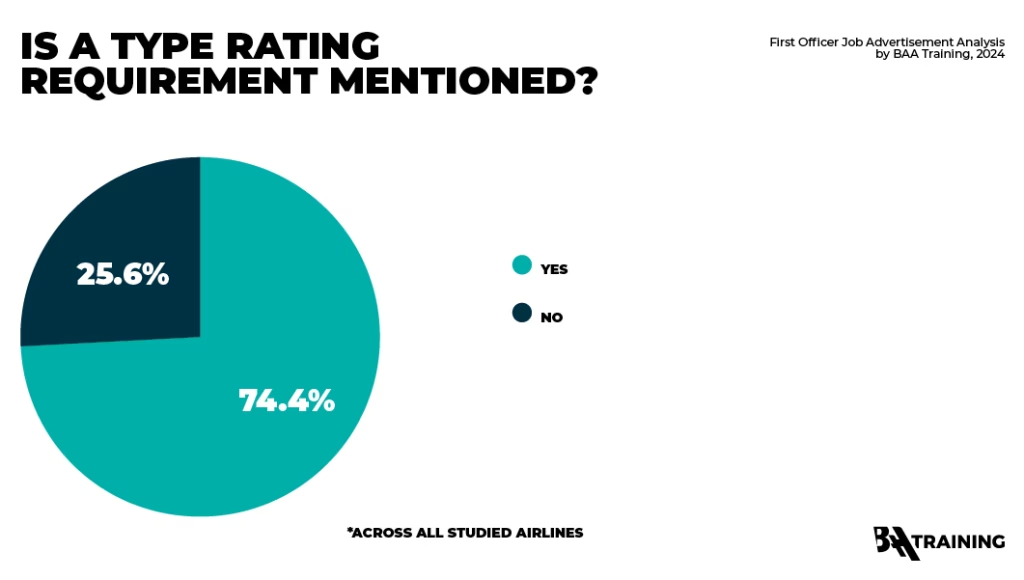
The research findings show that the vast majority of legacy/popular low-costs (76,7%) and ACMI/charter/cargo (96,7%) airlines do require a current Type Rating. However, a different trend emerges when studying Type Rating requirements among regional airlines. Only half of them (50%) strictly require a valid Type Rating, while 43,3% indicate that a Type Rating is not required, followed by 6,7% stating that it is preferable but not critical.
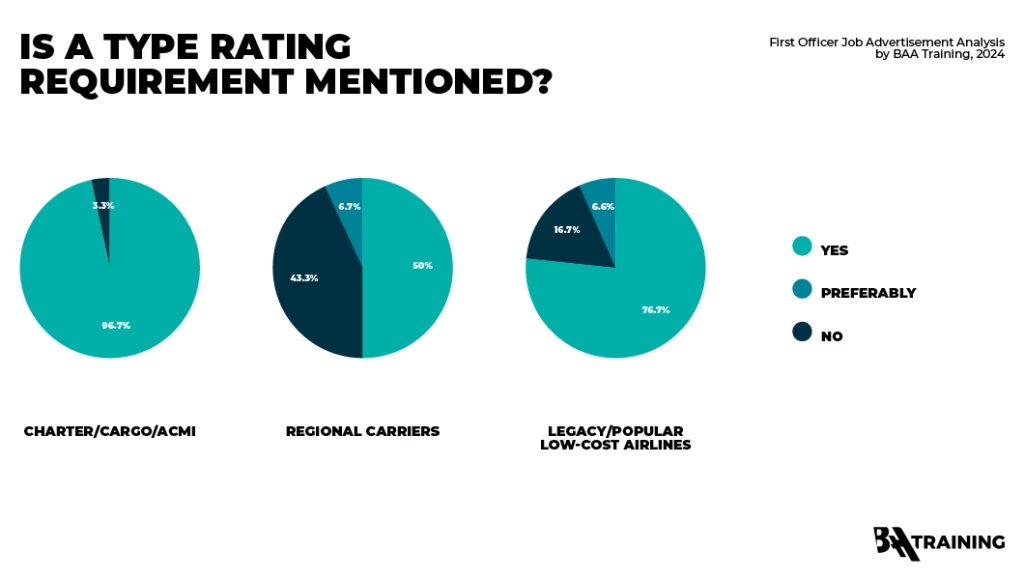
The message is clear—a self-funded Type Rating remains the fastest track to an airline career. However, there is a promising opportunity for those starting their career with a regional airline.
Nevertheless, there might be some bias involved as further clarification is needed on what precisely “no Type Rating required” means. Some of the job vacancies may imply the Type Rating is fully reimbursed by the airline, while others might mean it is sponsored by the airline with a bonding period, where you pay off the Type Rating cost through your salary. Another interpretation could be that you are free to apply as a Non-Type Rated (NTR) candidate, with the training covered either fully or partially by the airline.
In any event, the data found offers promising prospects in terms of Type Rating for individuals constrained by financial limitations.
Flight experience on type requirements
A Type Rating qualifies you to occupy the co-pilot seat when your total flight time is at least 250 flight hours, according to EASA regulations, in contrast to the 1500 hours required by the FAA. However, it often does not guarantee a smooth path to the airline cockpit. Why?
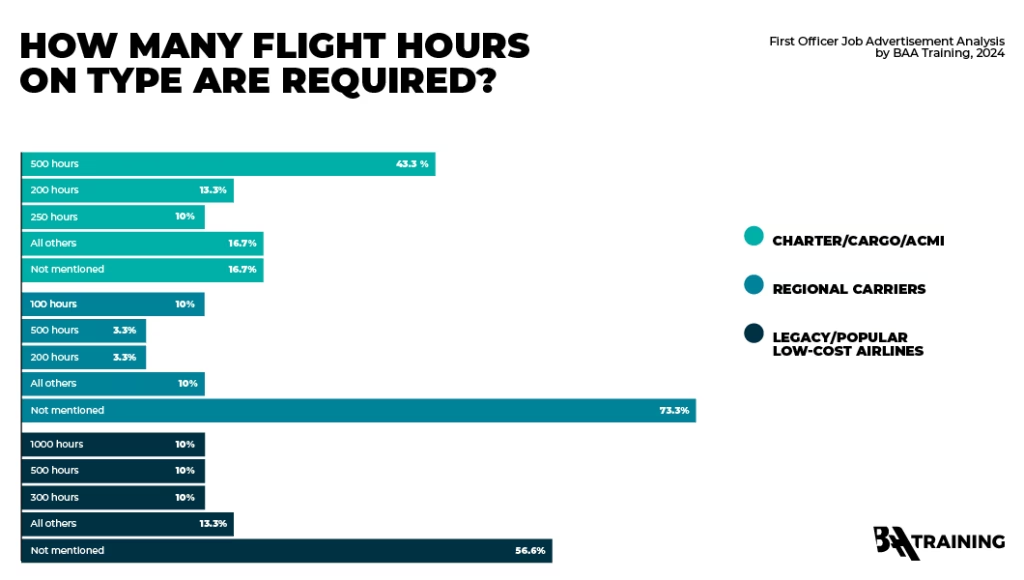
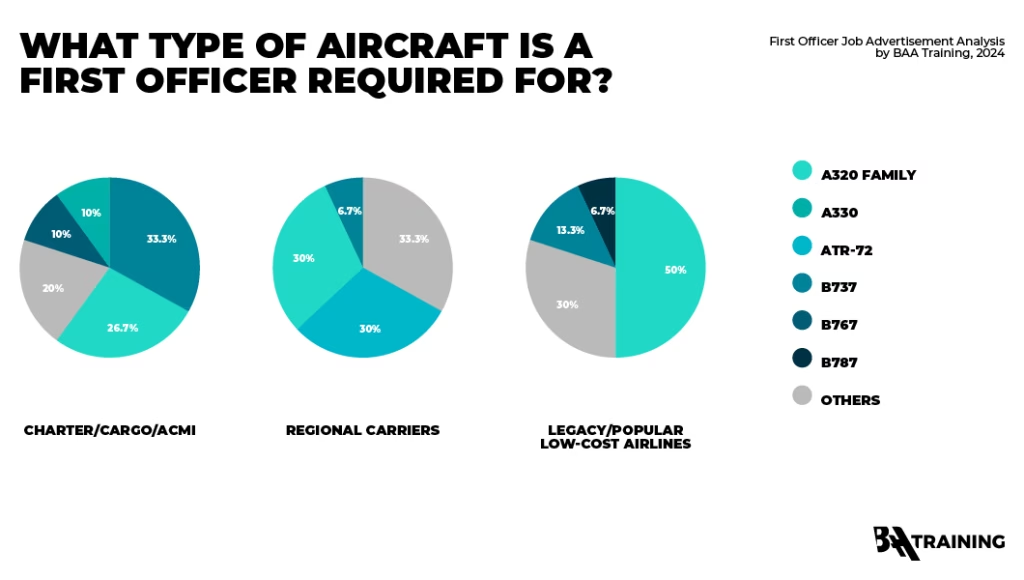
Despite the modest 250 hours of total time being sufficient in Europe, airlines frequently demand a specific number of flown hours on type (e.g., A320 family, B737, or other). This number is sometimes double or triple the minimum total required by regulations.
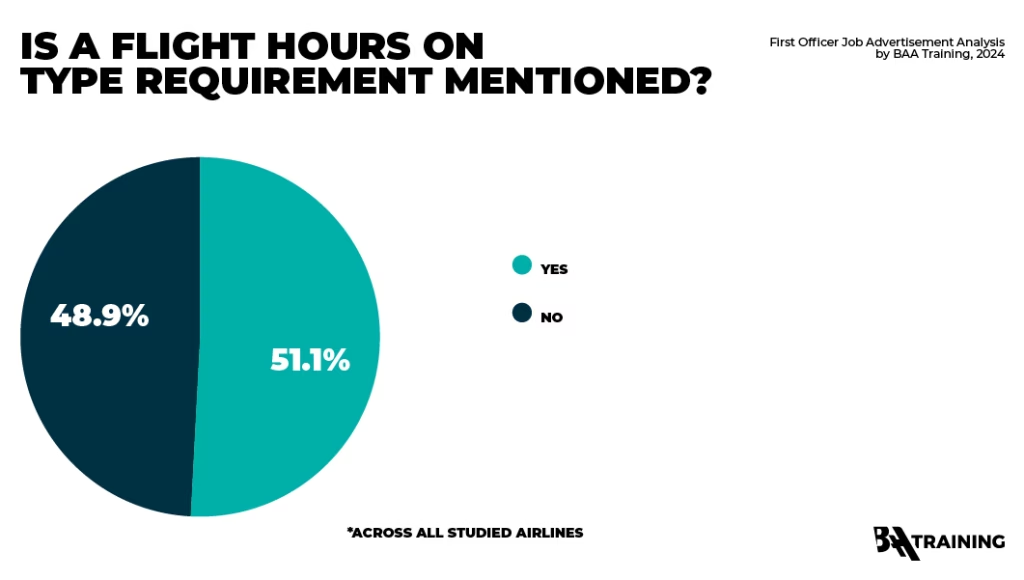
This discrepancy arises because insurance companies, which insist airlines take all necessary measures to ensure safe operations, advocate for hiring experienced crews, especially considering that studies indicate a peak in accident rates among pilots with around 200 to 400 hours on type. However, this may not solely account for the disparity. The minimum hours on type can also stem from company policy, as airlines may prioritize more experienced pilots, or be established by unions to deter salary reductions by hiring cadets instead of agreeing to higher pay for experience.
Let’s explore whether the pilot shortage has led airlines to become more flexible in waiving their minimum preferred “on type” requirements or at least reducing them.