From cockpit automation to ultra-efficient engines, the industry has been reshaped by people who refused to settle for ‘if it ain’t broken, don’t fix it.’ Let’s take a look at the seven aviation innovations that changed the experience of flying for pilots, airlines, and passengers worldwide.
1. Jet Propulsion Systems
The introduction of the jet propulsion system in the mid-20th century helped redefine long-haul travel. Jet engines produced far greater thrust, delivered smoother performance, and used fuel more efficiently than their propeller-driven predecessors. Suddenly, routes like New York to London were measured in hours rather than ‘hope you packed enough sandwiches.’
Influence on Future Designs
Whittle’s turbojet established the blueprint for modern jet propulsion. His design – with a compressor, combustion chamber, and turbine producing continuous thrust – proved scalable, efficient, and adaptable, forming the foundation for both military and commercial engines. Von Ohain’s parallel work demonstrated the viability of jet-powered flight, but it was Whittle’s configuration that offered the flexibility engineers needed to improve performance, increase fuel efficiency, and expand the range of aircraft. Today, every jet engine in service owes its core principles to these early breakthroughs.
2. Sustainable Aviation Fuel (SAF)
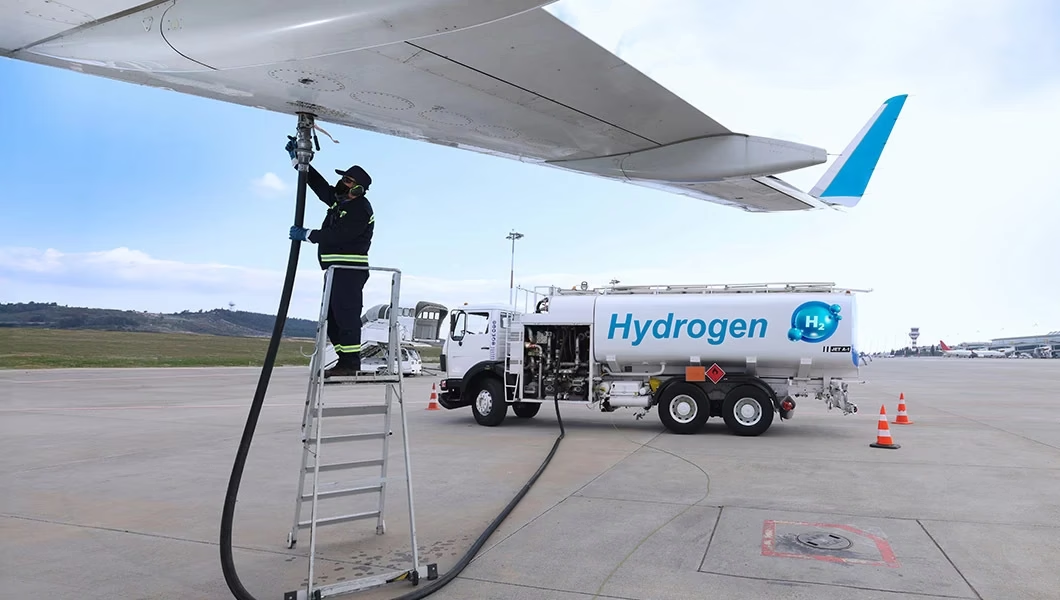
Fast-forward to the 21st century, and aviation found itself facing a new frontier: sustainability. Enter Sustainable Aviation Fuel, or SAF – a renewable or synthetic alternative to conventional jet fuel that can reduce lifecycle carbon emissions by up to 80%. For an industry built on kerosene, that’s nothing short of transformative.
Impact on the Aviation Industry
SAF is quickly becoming the backbone of aviation’s decarbonization strategy. Airlines worldwide are signing long-term offtake agreements, governments are introducing mandates, and manufacturers are testing 100% SAF capabilities – a crucial step toward widespread adoption.
While production volumes are still limited, the industry sees SAF as its most immediate and scalable solution for cutting emissions. As technology advances and costs decrease, SAF is expected to transition from a niche innovation to a mainstream fuel, marking the next step for the aviation industry.
3. Fly-By-Wire (FBW) Control Systems
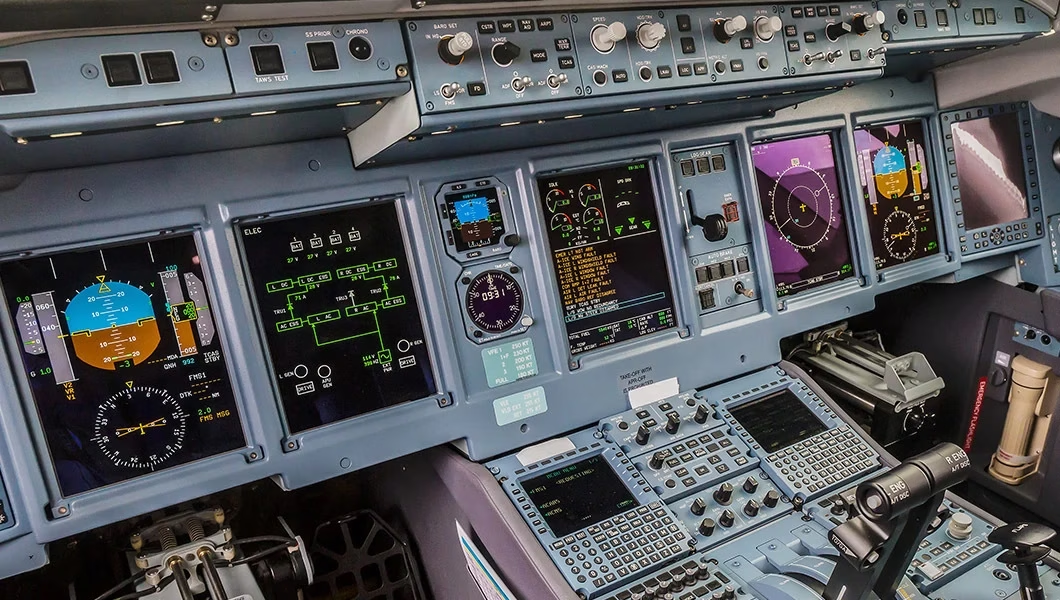
If jet engines pushed aviation into the future, Fly-by-Wire (FBW) systems gave pilots the tools to keep up. FBW replaces heavy mechanical linkages with electronic signals, turning pilot inputs into precise computer-interpreted commands. This made modern aircraft lighter, more responsive, and enhanced flight safety.
How Fly-By-Wire Changed Piloting
Fly-by-Wire made aircraft lighter, safer, and more efficient by replacing mechanical linkages with digital control. It introduced flight envelope protections, improved handling, and reduced pilot workload – all of which shaped how modern airliners operate today.
Because FBW is such a foundational technology, we explore it in more detail in our dedicated article here.
4. GPS Navigation System
The introduction of satellite-based navigation altered how aircraft plan, route, and execute flights. Unlike traditional systems that relied on ground stations with limited range, GPS provides continuous, global positioning accuracy. This shift gave aviation a level of precision and reliability that older radio-based aids simply couldn’t match.
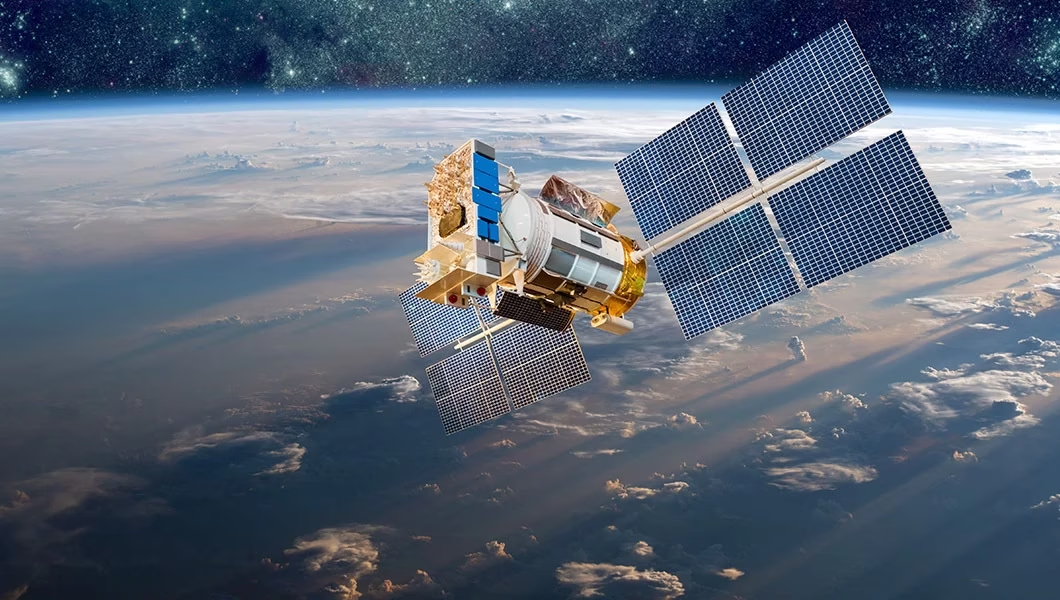
GPS Effect on Modern Flights
Satellite navigation brought several major advantages:
- Greater route flexibility: Pilots are no longer tied to ground-based navigation corridors, allowing more efficient routing.
- Improved approach procedures: GPS enabled Area Navigation (RNAV), Global Navigation Satellite System (GNSS), and Required Navigation Performance (RNP) approaches, offering precision-like accuracy at airports without Instrument Landing Systems (ILS). Yes, aviation loves its alphabet soup, but behind all those letters is a simple truth: pilots no longer have to play connect-the-dots with ground stations.
- Enhanced situational awareness: The constant stream of positional data supports terrain awareness systems, performance monitoring, and advanced flight management.
- Fuel and time efficiency: More direct routing and optimized descent profiles reduce fuel burn and overall flight time.
These improvements have made GPS a core component of international aviation. It supports both daily commercial operations and long-term infrastructure planning, especially in regions where building and maintaining ground stations is impractical.
5. Composite Materials in Aircraft Design
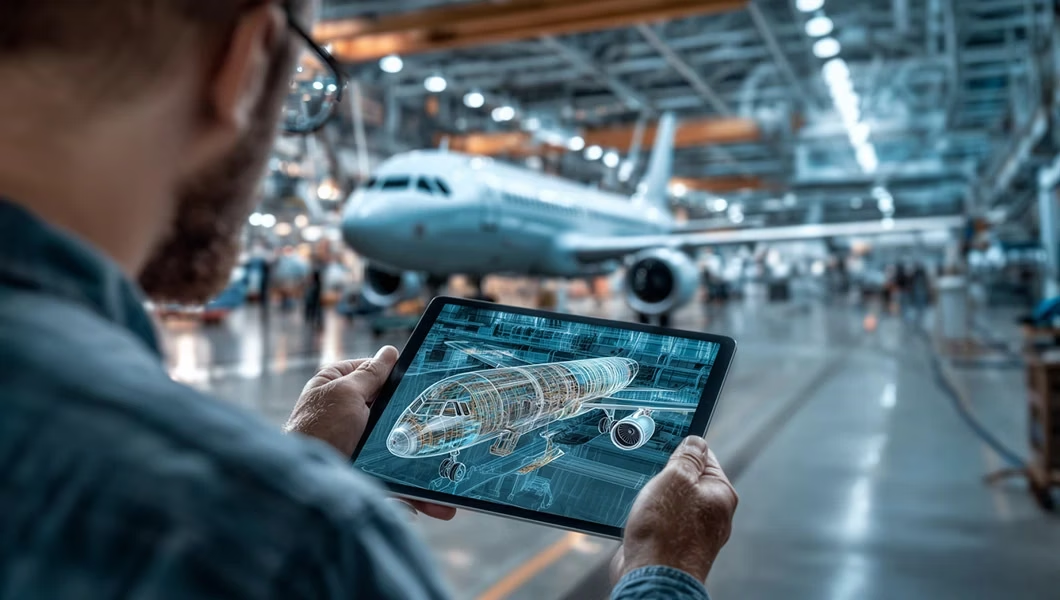
The shift from traditional aluminum alloys to advanced composite materials was a major turning point in aircraft manufacturing. Composites—primarily carbon-fiber reinforced polymers (CFRP) – offer high strength, low weight, and excellent fatigue resistance. Suddenly, building a plane was less like working with giant aluminum cans and more like crafting a Formula 1 car – every gram mattered.