And you waved back?
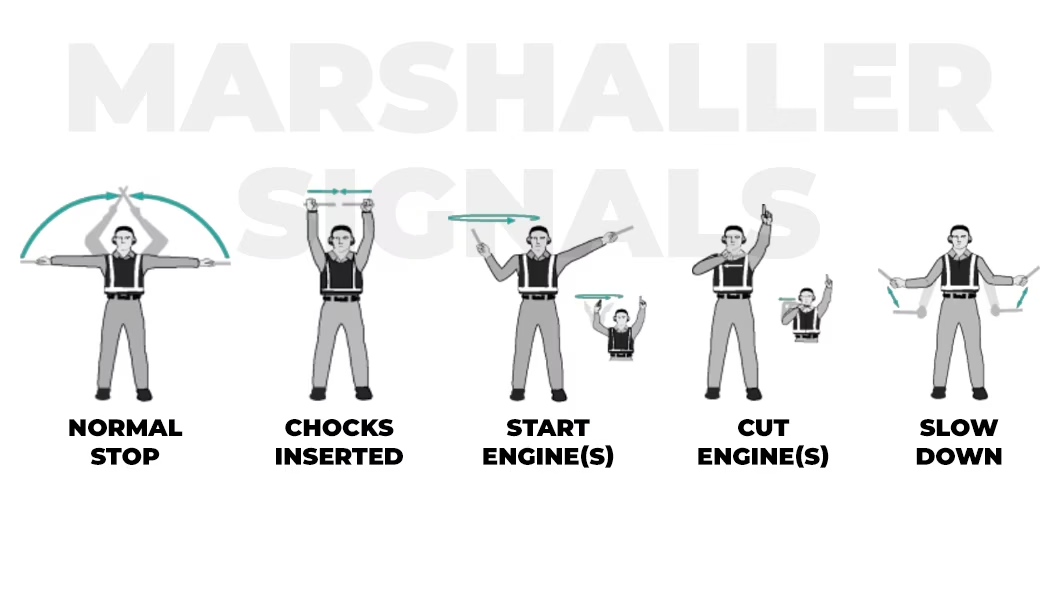
While you make friends before takeoff to your next destination, pilots in the cockpit know it’s the standard aircraft marshalling signals directed at them (sorry!). It might seem fun to wave your hands around before an A320 is towed for taxiing, but these aviation professionals ensure efficient and safe operations on the ground, with each of their movements practiced to perfection.
For pilots, this is yet another skill to get the hang of and master in order to make certain that the traffic on the ground is as safe. So, what are some of the most common signals a pilot must know?
What is aircraft marshalling?
Let’s start with the basics, shall we? Aircraft marshalling is essentially one-on-one visual communication between the ground handling professional, in this case, a marshaller, and the pilot during taxiing, parking, and other ground-related maneuvers.
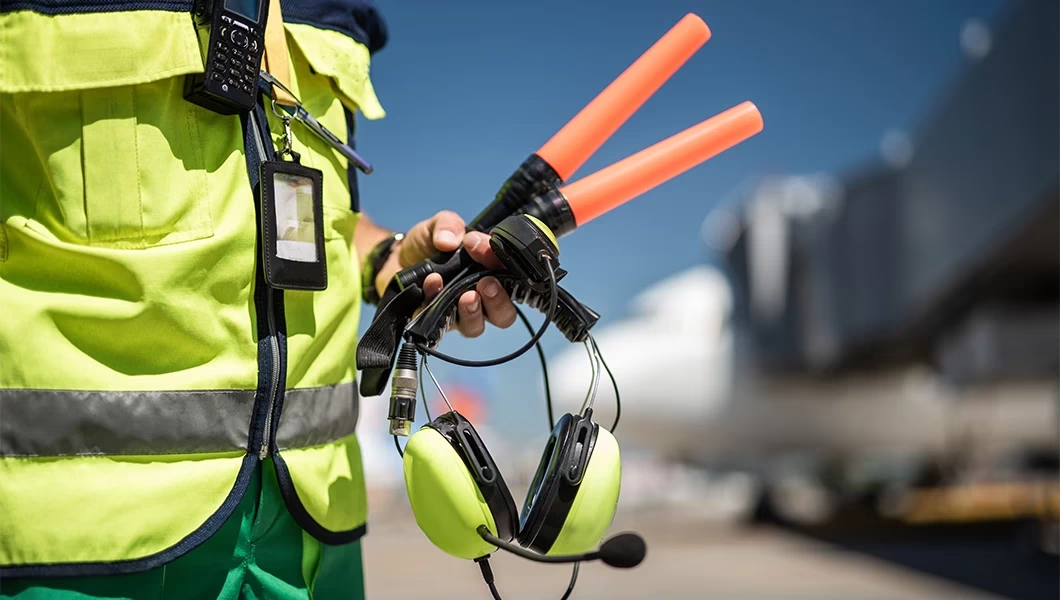
Imagine being the ultimate traffic conductor for airplanes. That’s exactly what an aircraft marshaller does – guiding massive jets and smaller aircraft to their parking spots with a wave of the hand (and sometimes a little help from a radio). It’s all about precision and clear communication as the marshaller directs the pilot to safely navigate the tarmac, dodging other planes, airport gear, and even buildings. With every signal, the marshaller ensures that each aircraft is parked perfectly, like a pro, making some of the busiest places in the world run smoothly.
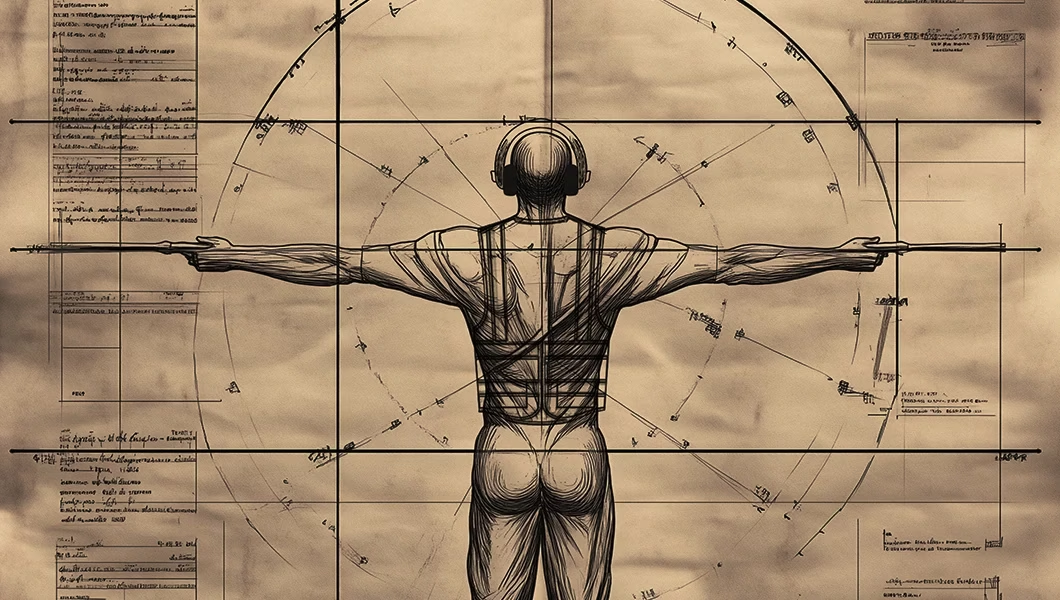
They also have to stand out on the ground to be easily spotted. This means that they wear reflective safety vests and earmuffs to protect themselves from the sounds of roaring engines and, most of the time, dictate the movements of the aircraft with two wands.
How many aircraft marshalling signals are there?
The easy answer – quite a few. And to make things really challenging, some of the signals have variations, meaning marshallers at different airports might be waving at you differently. A pilot’s job is to know the approved signals that are used throughout most of the world’s airports. The good thing is that both the ICAO (International Civil Aviation Organization) and IATA (International Air Transport Association) have approved industry standard signals, meaning that 99.9% of the time, the ones you learn at a pilot academy, you will also encounter at an airport. While there are quite a few wave patterns to remember – like everything in aviation – there are the most common ones that you will see from the cockpit window.
Most common marshalling signals
Whether you’re planning to commandeer an airliner like an A320 or similar or enjoy coasting the familiar landscapes in a single-engine like Cessna 172S with your Private Pilot’s License, you will need to understand what the air marshaller signals you. It’s true that larger, busier airports will most likely have a visual docking guidance system in place to assist pilots and aircraft alike in docking at the exact position in front of the respective gates. But knowing how to interpret the signals is still a skill that pilots have to learn.
So, what are the most common visual communication patterns you might encounter as a pilot?
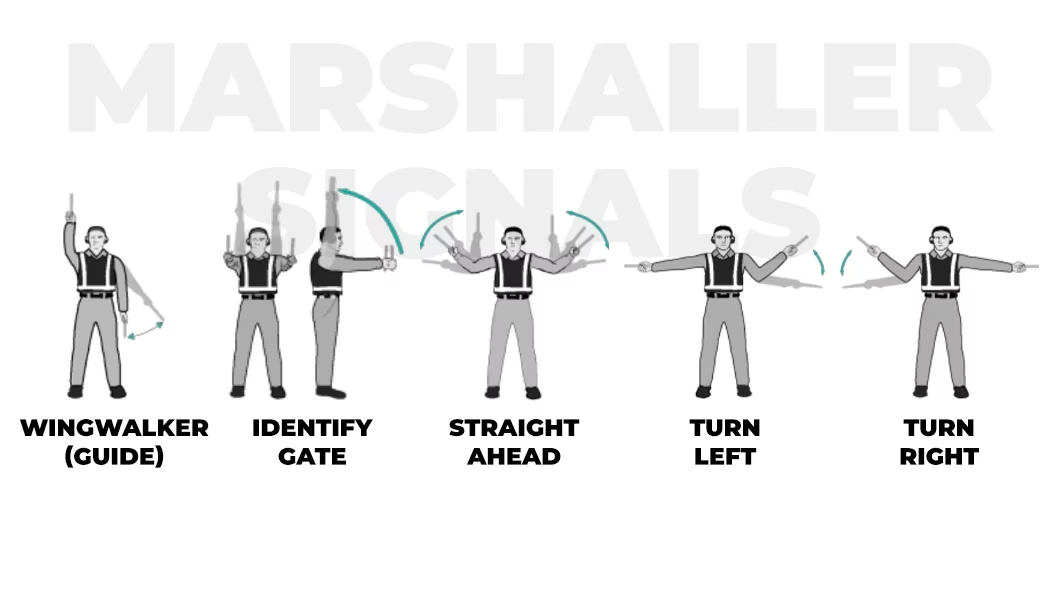
1. Wingwalker/Guide
The signal: Marshaller raises right hand above head level with wand pointing up; moves left-hand wand pointing down toward the body.
This signal is used by a person standing at the aircraft’s wingtip to let the pilot, aircraft marshaller, or push-back operator know that it’s safe to move the aircraft on or off the parking spot without hitting anything.
2. Identify Gate
The signal: Marshaller raises fully extended arms straight above the head with wands pointing up.
This signal is used to show the pilot which parking gate or position they should move the aircraft towards. Short and sweet.
3. Straight Ahead
The signal: Marshaller bends extended arms at elbows at the sides and moves wands up and down from chest height to head.
This signal directs the pilot to keep the aircraft moving forward in a straight line. Used for arrivals and parking at the gate.
Alternative Signals
This signal has a couple of variations that an air marshaller might use. The first one is that a marshaller can also raise wands at chest level, extending the arms outwards to create a pushing motion. Another variation could be bringing the bent arms to the shoulders and then pushing the wands outwards repeatedly.
4. Turn Left
The signal: With the right arm and wand extended at a 90-degree angle to the body, the marshaller makes a “come ahead” signal with the left hand. The rate of signal motion indicates to the pilot the rate of aircraft turn.